Born to lead? Think again
As a child, I savoured stories. During family gatherings, I would sit cross-legged on the floor, eyes wide, absorbing every word as my elders wove tales of resilience.

Shutterstock
Opinions expressed by Entrepreneur contributors are their own.
You're reading Entrepreneur United Kingdom, an international franchise of Entrepreneur Media.
Stories of freedom fighters who refused to stay silent. Stories of how education was a golden ticket. Stories of how impact was not a given; it was earned. Those stories were not just entertainment, they were roadmaps. They whispered that where I came from was not a limitation. It was a beginning. That belief shaped how I saw leadership. The stories showed me that leaders came from everywhere. Lincoln, raised in poverty with no formal education, taught himself, failed, learned, and kept going. Gandhi, faced with injustice, organised, resisted, and ignited a movement. Aparna Sen, once an actor, stepped behind the camera to amplify voices long ignored. These were not just history lessons to me. They proved that leadership was not a birthright. It demanded grit, perseverance, and the courage to challenge the status quo.
Were you born a leader, or did you become one? I asked friends, colleagues, and family the same question. The responses were mixed. And when you look at the data, scientists and practitioners do not quite agree either. What we do know is that leadership is not about certainty. It is about stepping into the unknown and finding your way. The world changes. Disruption surrounds us. Uncertainty is inevitable. No one is born knowing how to navigate discomfort. We learn by doing, by failing, by getting back up. The most remarkable leaders I have known did not avoid discomfort. They steered into it. We expect leaders to make sense of complexity, to paint a vision of the future that brings others along. We look to them for strategy, stability, clarity in times of crisis. Too often, we believe that leadership must be about perfection, power, and position.
It is not. Leadership is a way of showing up, taking responsibility, and creating impact, no matter your role. Leadership is a choice. Authority can be given, but leadership must be earned. Gallup studies performance across millions of employees and work units and found that only one in ten people are naturally wired for leadership. Another two in ten have the potential to develop it. That means most great leaders are not born; they are made. That leaders emerge through choices, learning, and the courage to keep showing up.
I noticed how the themes of the stories I heard as a child played out in real time. Leaders built companies brick by brick, not with luck, but with vision and effort. They faced rejection and systemic barriers. They created space, impact, and commitment. They encountered doubt, failure, and uncertainty. But they learned. They grew. They contributed. Patterns emerged. Leaders were not always the loudest. They were not the ones with the perfect resumes or the most commanding presence. They were not necessarily at the top of an organisational chart. They were the ones who asked the tough questions, who refused to accept the status quo, who brought out the best in those around them. They understood themselves and let that understanding shape how they led.
These leaders did not wait for permission. Instead, they found their through line, the golden thread that connected who they were to how they led. That clarity gave them conviction, and that authenticity inspired others to follow.
I learned this firsthand during the pandemic when every leadership playbook fell apart. No one had the answers. Some froze, waiting for normal to return. Others moved forward anyway. Not because they had certainty, but because they refused to let uncertainty stop them. These leaders did not panic or pretend to know it all. They acknowledged the fear, embraced the chaos, and chose to act anyway. I felt it too, the weight of responsibility, but also the possibility. There were no perfect solutions, only the choice to show up. Instead of chasing control, I listened to my team, to myself, to the moment. We did not aim for perfection. We focused on clarity.
Each of us can access our through lines. It comes down to three essential actions: reach in, reset, and reach out. Reach in by understanding your values and your story; know what matters to you and why. Reset by challenging your assumptions, embracing uncertainty, and adapting to change. Reach out by leading with care. This is not a checklist. It is a cycle. One we repeat again and again. When you know who you are, what you stand for, and how you want to show up, leadership stops being about status. Resilience becomes a skill and adaptability becomes a practice.
Leadership requires commitment. Every day, whether you know it or not, you choose how you lead. You choose how you listen, how you make decisions, how you respond. Leadership does not require grand gestures or sweeping change. It happens in the everyday moments, the tough conversations, the small risks, the decisions that align with your values.
So, where do you start? Right where you are. Because if you do not, who will? Leading is a choice, not a reward. No one expects you to be fearless. But leadership asks you to step up anyway Too often, we wait. We wait for the right moment, the perfect conditions, for someone else to step up. But leadership is not about waiting. It is about committing. If you do not challenge the status quo, take that first step, or ask that hard question, who will?
So here is the challenge. Stop waiting. Find your through line. Get clear on who you are and how you want to lead. Take one small step today. Own your mistakes. Push for change where it matters. Because leaders are not just born. And they are not just made. They are forged, one choice at a time, one decision at a time, one through line at a time.
Stories of freedom fighters who refused to stay silent. Stories of how education was a golden ticket. Stories of how impact was not a given; it was earned. Those stories were not just entertainment, they were roadmaps. They whispered that where I came from was not a limitation. It was a beginning. That belief shaped how I saw leadership. The stories showed me that leaders came from everywhere. Lincoln, raised in poverty with no formal education, taught himself, failed, learned, and kept going. Gandhi, faced with injustice, organised, resisted, and ignited a movement. Aparna Sen, once an actor, stepped behind the camera to amplify voices long ignored. These were not just history lessons to me. They proved that leadership was not a birthright. It demanded grit, perseverance, and the courage to challenge the status quo.
Were you born a leader, or did you become one? I asked friends, colleagues, and family the same question. The responses were mixed. And when you look at the data, scientists and practitioners do not quite agree either. What we do know is that leadership is not about certainty. It is about stepping into the unknown and finding your way. The world changes. Disruption surrounds us. Uncertainty is inevitable. No one is born knowing how to navigate discomfort. We learn by doing, by failing, by getting back up. The most remarkable leaders I have known did not avoid discomfort. They steered into it. We expect leaders to make sense of complexity, to paint a vision of the future that brings others along. We look to them for strategy, stability, clarity in times of crisis. Too often, we believe that leadership must be about perfection, power, and position.
It is not. Leadership is a way of showing up, taking responsibility, and creating impact, no matter your role. Leadership is a choice. Authority can be given, but leadership must be earned. Gallup studies performance across millions of employees and work units and found that only one in ten people are naturally wired for leadership. Another two in ten have the potential to develop it. That means most great leaders are not born; they are made. That leaders emerge through choices, learning, and the courage to keep showing up.

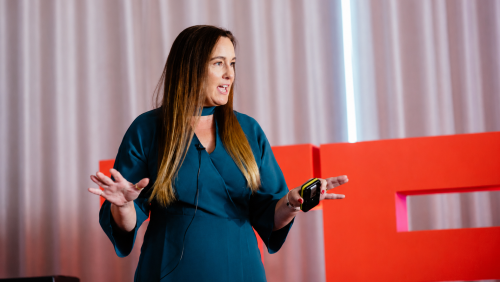
Archana Mohan • Chief Operations and Technology Officer
Archana Mohan is a dynamic, multilingual Chief Operations and Technology Officer within the finance sector,... Read more