From a Storm-Struck Trading Floor to Reshaping the Hedge Fund World: Peter Rose’s Journey

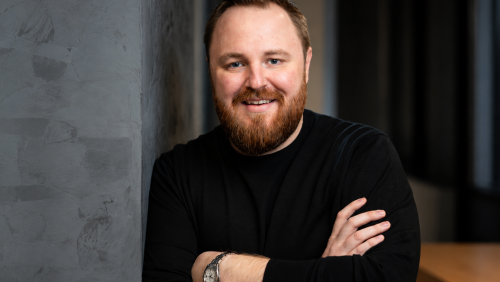
Peter Rose
Careers often develop through a combination of timing, mentorship, early challenges, and personal judgment. For Peter Rose, one early experience that shaped his approach occurred during the market turbulence of Black Monday in 1987. At the time, he was in the early stages of his career on London’s options trading floor and was among those present when, as he recalls, severe storms prevented many colleagues from reaching the exchange. Managing that environment helped establish his understanding of risk, market structure, and decision-making under pressure.
According to Rose, he entered the hedge fund space at a time when it was still a relatively small segment of the market and not yet widely understood by larger institutions. He joined an investment organization where he worked on a fund-of-funds approach that brought together quantitative analysis and qualitative assessment. “At that stage, many allocators were still relying mainly on meetings and personal judgment. We wanted a more structured approach, where data helped frame a manager’s history, and our discussions helped us understand how they thought and made decisions,” Rose shares.
His responsibilities expanded from his role as a senior research analyst to leading investment oversight. As pension funds and insurance capital began entering hedge funds, Rose notes that expectations shifted toward documentation, transparency, and institutional rigor. He participated in building frameworks that articulated risk controls and investment philosophy in ways suited to long-term allocators.
Subsequent roles brought broader geographic exposure. Based in London yet frequently traveling to the United States, Rose took on global research leadership within a large hedge fund platform. Transatlantic flights became routine as he engaged with managers across strategies and markets. The experience refined his perspective on operational resilience, governance, and portfolio construction across cycles. “Travel teaches you that markets speak different dialects,” he says. “You need to listen carefully to understand their common language.”
In 2007, Rose founded his own foreign exchange-focused hedge fund. In his view, currency markets required a nuanced interpretation of macroeconomic signals and policy shifts. The firm operated during the 2008 financial crisis, a period of significant global financial adjustment. “Our approach at the time focused on positioning and liquidity, and that helped us work through the conditions we were facing. It eventually made sense for the strategy to move to a larger investment firm,” Rose says. The transaction marked a natural pause and opened space for reflection.
Over the following years, Rose managed his own capital and continued exploring broader questions about how the hedge fund industry might evolve. A period of contractual restriction gave him time to revisit ideas he had been developing throughout his career. He reviewed detailed notes from earlier discussions with industry practitioners, many from a time when conversations were more informal and exploratory. These records helped him shape a framework that brought together artificial intelligence and discretionary judgment, reflecting both his past experiences and his interest in how investment processes could adapt.
As these ideas took clearer shape, they eventually formed the foundation for The Social Hedge Fund, a hedge fund firm that produces income and asset appreciation, where Rose now serves as founding partner and Chief Investment Officer. The initiative builds on his longstanding interest in broadening participation in the industry while maintaining institutional standards. Candidates are assessed for qualities such as intellectual agility, emotional awareness, and curiosity. “Curiosity is the engine,” Rose explains. “A curious mind keeps searching beyond the obvious.”
Selected participants are paired with strategies that align with their working style and interests. Some gravitate toward macro environments, while others show strength in relative value or thematic approaches. AI supports research efficiency by giving individuals from a range of academic and professional backgrounds access to analytical tools that help structure their work. Rose views technology as a way to enhance capability while keeping human judgment central. He says, “AI can process scale, and judgment gives it direction.”
A personal journey reinforced this mission. Travel in parts of Africa, including time observing humanitarian initiatives, deepened his appreciation for resilience and untapped potential. “Seeing communities struggle for basic necessities and still offer hospitality impacted me,” he shares. “What I saw was potential constrained by circumstance.” The experience strengthened his belief that economic opportunity carries multiplier effects for families and neighborhoods.
The Social Hedge Fund seeks to democratize the employment model within the hedge fund industry, having a direct social benefit on individuals and society as a whole. “The fund represents a paradigm shift in alternative asset management, combining institutional-grade investment performance with transformative social impact,” Rose shares. “Our unique model identifies exceptional talent overlooked by traditional finance due to adverse life circumstances rather than lack of ability, then systematically develops these individuals into skilled portfolio managers across multiple strategies.” Rose emphasizes continuity with the institutional discipline he helped cultivate over decades. Risk management frameworks, data analytics, and governance standards remain integral; the difference lies in who gains access to those tools.
Essentially, through The Social Hedge Fund, Peter Rose brings decades of experience into dialogue with a broader vision of access. His career reflects early trading floor lessons, contributions to institutional infrastructure, global research leadership, entrepreneurial initiative, and a sustained commitment to thoughtful evolution. Each chapter informs the next. “Industries evolve,” he says. “The responsibility is to evolve with them, while remembering the principles that gave them life.”
Careers often develop through a combination of timing, mentorship, early challenges, and personal judgment. For Peter Rose, one early experience that shaped his approach occurred during the market turbulence of Black Monday in 1987. At the time, he was in the early stages of his career on London’s options trading floor and was among those present when, as he recalls, severe storms prevented many colleagues from reaching the exchange. Managing that environment helped establish his understanding of risk, market structure, and decision-making under pressure.
According to Rose, he entered the hedge fund space at a time when it was still a relatively small segment of the market and not yet widely understood by larger institutions. He joined an investment organization where he worked on a fund-of-funds approach that brought together quantitative analysis and qualitative assessment. “At that stage, many allocators were still relying mainly on meetings and personal judgment. We wanted a more structured approach, where data helped frame a manager’s history, and our discussions helped us understand how they thought and made decisions,” Rose shares.
His responsibilities expanded from his role as a senior research analyst to leading investment oversight. As pension funds and insurance capital began entering hedge funds, Rose notes that expectations shifted toward documentation, transparency, and institutional rigor. He participated in building frameworks that articulated risk controls and investment philosophy in ways suited to long-term allocators.