Why timing matters in fundraising and acquisitions
Timing, leverage and strategy can make or break a company’s biggest deal.

River
Opinions expressed by Entrepreneur contributors are their own.
You're reading Entrepreneur United Kingdom, an international franchise of Entrepreneur Media.
A brilliant company can still end up with a bad deal. After two exits and three start-ups, I have learned that fundraising and acquisitions are determined not only by what you have built, but by when you choose to move – and no game teaches that better than chess. I say that as someone who has spent a fair amount of time around the board, and then ended up building and selling a chess company with my brother and co-founder Sam. The more deals I’ve been through, the more I’m convinced that a good company operator is close to a grandmaster.
Today we’re building River, providing businesses with AI agents that sell, for which we recently raised a pre-seed round backed by Shorooq and the founders of Ramp and Kalshi. Across all those experiences, whether raising capital or negotiating an acquisition, the game has been the same. That doesn’t mean I’ve mastered it – at pre-seed, we’re testing every one of these lessons again in real time. The skill lies in planning ahead and reading the board. That includes knowing when to make your move, when to reveal your strategy and when to apply pressure – while keeping the tension and never letting yourself be forced into a move. Chess players call that zugzwang: the position where you have to move, and every option weakens you.
Money is easiest to raise when you least need it, nearly impossible when you’re desperate. In my opinion, this is the first and most important lesson when it comes to fundraising – you should never do so from a point of weakness. A shortening runway kills your ability to walk away, and every investor can smell it. The best founders raise slightly ahead of need, even if giving up equity before you strictly have to feels counterintuitive. My thinking on this changed a lot: I used to believe you needed impressive revenue metrics before you’d even earned the first investor conversation. I now think that’s wrong – investors are much more receptive to early-stage chats than you might think.
We lived this with River. We started speaking to investors early, with a product that had reached substantial ARR in a quarter and only a raw prototype of what would come next. Honestly, the investors preferred the prototype over the revenue-generating product. No revenue, no customers, just a vision they also believed in – and that’s what they ended up funding. We shut the other operation down. Had we waited until the “right” metrics were in place, we would have been raising for the wrong product.
There’s a well-known asymmetry in venture: a bad investment costs them one time their money, but missing the next big thing costs them a thousand times that. Nobody wants to be the person who met Uber and passed up on the opportunity, so investors almost never give you a hard no. They keep doors open with any founder who might be the next big thing, and we leaned on that: we kept investors updated, let them watch us execute, and every milestone compounded their conviction. That said, the hardest part is getting the ball rolling. With River, the first conversations were all positive, but nobody was putting their hands in their pockets. What changed everything was a dinner in Palo Alto with friends – prominent tech entrepreneurs who each wrote an angel check. The next day, people felt the train was leaving the station and started hopping on. Nobody wants to be first, but nobody wants to be left behind either. I wish I could say we engineered that first moment; mostly, we got lucky and learned from it.
The proof required changes by stage. Pre-seed can be about a strong thesis, team, prototype or customer commitments; seed should show that something is beginning to work; later rounds require the metrics to carry much more of the argument. In short, if you’re playing the venture-backed game, your ability to raise should be a game you are constantly playing, and honestly, enjoying. If the idea of always raising scares you, maybe a bootstrapped path suits you better, and there’s nothing wrong with that.
Courting acquirers is like chess, read the board before revealing your strategy. With investors, you shouldn’t be stressed about revealing too much – the more they see, the more conviction they build. Acquirers are a different game. Getting those conversations started is one thing, but learning to manage them well is another entirely. Often the joy or relief that comes from securing that initial interest can cloud judgement, when the reality is you are still a long way from safe harbour. The first risk is that you end up disclosing too much too early and the buyer you’re speaking to turns out to be a competitor scoping out the space. Again, it comes back to timing – you need to judge the perfect moment for the grand reveal.
As an example, before River, Sam and I built Masterboard, an autonomous chessboard that allowed people in different countries to play over the board. Masterboard’s technology was completely unique at the time and that was our edge. We’d had various chats in the early stages, but never gave away enough that an interested party could easily go away and create something similar. When that changed was when a potential acquirer asked to do an in-person meet in Dubai to get a closer look at everything.
The simple fact that the acquirer was prepared to fly halfway across the world to have this meeting was a huge green light. People don’t generally do that if they are simply hoping to copy an idea, they do it if they are serious about purchasing it, so that was the moment. We revealed how everything worked, cemented their confidence in the product and ended up selling the company – but it all came down to patience and waiting for the right moment.
Time is the enemy of every deal. It would have been easy to have taken our foot off the gas after getting a verbal commitment that day in Dubai. But what I’ve learned is that from the first moment until the ink is wet on the paper, you have to keep the momentum going. They say time kills deals, and it’s true. The longer anything drags, the more doubt creeps in. The buyer starts second-guessing and looking at alternatives. So we kept everything moving: we created urgency, pushed deadlines into the process, and kept the fear alive, especially the fear that another player would get the technology first, because then they’re not just late, they’re behind. We believe in this so deeply that it became the premise of what we’re building now at River: faster buying experiences, because time is the enemy of every deal.
Timing applies to narrative windows too. Our previous products – Masterboard and Masterspace, virtual spaces where players gathered and played together socially – both benefited from a unique convergence: Covid accelerated demand for remote social experiences, while The Queen’s Gambit pushed chess into popular culture. Had we sold much earlier, more of the value created by that narrative wave might have accrued to the buyer; had we waited indefinitely, the window could have closed. Judging the best moment is never easy and you’ll often get it wrong – we didn’t time everything perfectly either – but it’s often better to sell or raise slightly earlier than risk not doing so at all. And I’m a big believer in leaving some money on the table. The best deals close with the other side feeling they got a bit more. That’s not weakness, that’s how deals actually get done, it prevents things from stalling and it protects your reputation for everything you build next. It’s a small world, and that compounds.
Great companies are bought, not sold. How easy this advice is to follow depends on one question: are you building to exit, or because you believe your company is the future? If an exit is the goal from day one, the temptation is to rush towards it and treat every investor or buyer as your last chance. That pressure makes it harder to walk away, easier to show your hand too early and more likely that you force a deal on the wrong terms or at the wrong moment. Building to last gives you time and leverage. You can talk to investors before you need them, protect your edge until a buyer proves they are serious, and keep negotiations moving without needing them to close at any cost. That independence is also what makes the company attractive because investors know it will keep creating value with or without them. Could moving earlier or later have changed our own outcomes? Honestly, we’ll never know – with enough what-ifs you can rewrite any story. We made the best decisions we could with the signals in front of us, and the timing was kind to us.
Which brings me back to chess. The best move is rarely the one that’s made in haste or out of necessity. It’s the one that’s made while you’re enjoying the game, seeing the bigger picture and leaving you in the strongest position, with the most good options on the board.
A brilliant company can still end up with a bad deal. After two exits and three start-ups, I have learned that fundraising and acquisitions are determined not only by what you have built, but by when you choose to move – and no game teaches that better than chess. I say that as someone who has spent a fair amount of time around the board, and then ended up building and selling a chess company with my brother and co-founder Sam. The more deals I’ve been through, the more I’m convinced that a good company operator is close to a grandmaster.
Today we’re building River, providing businesses with AI agents that sell, for which we recently raised a pre-seed round backed by Shorooq and the founders of Ramp and Kalshi. Across all those experiences, whether raising capital or negotiating an acquisition, the game has been the same. That doesn’t mean I’ve mastered it – at pre-seed, we’re testing every one of these lessons again in real time. The skill lies in planning ahead and reading the board. That includes knowing when to make your move, when to reveal your strategy and when to apply pressure – while keeping the tension and never letting yourself be forced into a move. Chess players call that zugzwang: the position where you have to move, and every option weakens you.
Money is easiest to raise when you least need it, nearly impossible when you’re desperate. In my opinion, this is the first and most important lesson when it comes to fundraising – you should never do so from a point of weakness. A shortening runway kills your ability to walk away, and every investor can smell it. The best founders raise slightly ahead of need, even if giving up equity before you strictly have to feels counterintuitive. My thinking on this changed a lot: I used to believe you needed impressive revenue metrics before you’d even earned the first investor conversation. I now think that’s wrong – investors are much more receptive to early-stage chats than you might think.

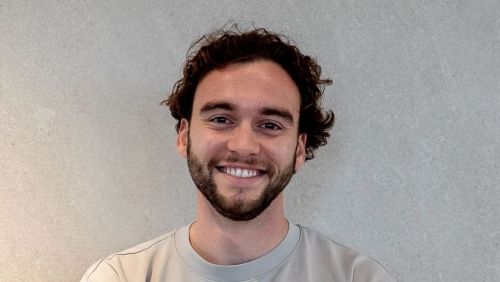
Tarek Abillama • Co-founder of River
Tarek Abillama, a London-based repeat co - founder of River, built and sold two technology... Read more