How the UK’s Entrepreneurs Can Navigate Current Trade Disruption
UK exporters face rising trade costs, disruption, and compliance risk.
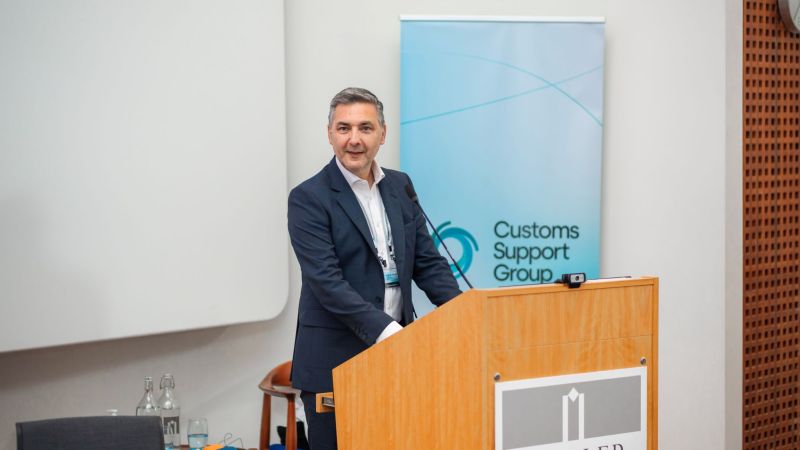
Customs Support UK & Ireland
Keiron Myall, Managing Director for Customs Support UK & Ireland
Opinions expressed by Entrepreneur contributors are their own.
You're reading Entrepreneur United Kingdom, an international franchise of Entrepreneur Media.
UK entrepreneurs are operating in one of the most challenging trade environments of the past decade. Export conditions are tightening, costs are rising and geopolitical risk is increasingly shaping day-to-day business decisions.
New data from the British Chambers of Commerce underlines the pressure. Just 25 per cent of UK businesses reported export growth in Q1 2026, down from 31 per cent in Q2 2018. Micro-exporters have been hit hardest, with only 18 per cent reporting growth.
Against this backdrop, the ability to navigate customs, compliance and supply chain risk is a brand-new hat entrepreneurs are wearing. For many, it is becoming a determining factor in whether international trade remains viable at all.
Practical Advice for Entrepreneurs Navigating Disruption
Periods of disruption expose weaknesses quickly. Rising energy prices, instability in key shipping routes and shifting trade policy are increasing friction at the border. Post‑pandemic research shows 78% of UK exporting SMEs were forced into drastic supply‑chain changes, with those slow to adapt more likely to see revenues fall.
The most resilient businesses prioritise visibility and preparation. That means understanding how goods move through the supply chain, where regulatory touchpoints sit and which dependencies pose the greatest risk. Customs processes, documentation accuracy and classification are often overlooked, yet they are the first areas to break down under pressure.
Findings from Customs Support Group’s Strategic Radar Survey reinforce this. 44% of businesses say customs and trade compliance has become more strategic, but many remain reactive. Around half have never conducted a formal classification review, leaving themselves exposed to unexpected duties, delays and audits.
Entrepreneurs should also reassess whether their trade models still reflect reality. Routes, suppliers or markets that once worked well may now introduce unnecessary cost or risk. Even basic scenario planning can help businesses anticipate disruption rather than absorb it when margins are already tight.
What Trade Deal Uncertainty Means for Exporters
Trade deal uncertainty is no longer abstract. It is shaping real commercial outcomes, particularly for smaller exporters with less capacity to absorb risk. Shifts in tariff regimes, the removal of exemptions and more stringent enforcement are increasing the complexity of cross-border trade, even where no formal agreement has changed.
The impact is uneven. Micro-exporters and early-stage businesses often rely on low-volume, high-frequency shipments or test orders to enter new markets. These models are especially exposed to increased documentation requirements, clearance fees and unexpected duties. What were once manageable costs can quickly erode margins or make certain markets commercially unviable.
For exporters, the key message is caution without retreat. Market diversification, flexible sourcing strategies and a clear understanding of applicable trade rules can reduce exposure. However, doing nothing and hoping conditions stabilise is rarely a winning strategy in a volatile trade environment.
Why Customs Compliance Has Become a Business Risk
As pressure at the border increases, the margin for error narrows. Correctly classifying goods, understanding origin rules and anticipating regulatory change are now critical to maintaining predictable costs and timelines.
Research continues to show that many businesses underestimate their exposure in this area. Misclassification, outdated processes or reliance on incomplete data can lead to unexpected duties, audits or shipment delays. For entrepreneurs operating on tight margins, these risks are often absorbed directly by the business.
Importantly, compliance is not just a legal obligation; it is a commercial safeguard. In times of disruption, authorities tend to enforce more strictly, not less. Businesses that have not invested in governance and oversight often feel the impact first.
Steps Businesses Should Take Now to Protect Supply Chains
There are practical steps entrepreneurs can take now to build resilience without overextending limited resources.
First, businesses should review their customs data and classification accuracy. Even a targeted review of high-volume or high-value goods can uncover latent risk. Second, supply chains should be mapped with a focus on regulatory dependencies rather than just logistics. Understanding where customs clearance, documentation or licensing applies provides clarity when disruption occurs.
Finally, many entrepreneurs are recognising the value of specialist external support. Few small or medium-sized businesses can justify maintaining in-house customs expertise, particularly as regulations evolve. Partnering with experienced customs and trade specialists allows entrepreneurs to access up-to-date guidance, digital tools and regulatory insight without committing to permanent overhead.
In a disrupted trade environment, resilience is rarely built overnight. But for UK entrepreneurs, taking proactive steps now can mean the difference between scaling internationally and retreating from export markets altogether.
UK entrepreneurs are operating in one of the most challenging trade environments of the past decade. Export conditions are tightening, costs are rising and geopolitical risk is increasingly shaping day-to-day business decisions.
New data from the British Chambers of Commerce underlines the pressure. Just 25 per cent of UK businesses reported export growth in Q1 2026, down from 31 per cent in Q2 2018. Micro-exporters have been hit hardest, with only 18 per cent reporting growth.
Against this backdrop, the ability to navigate customs, compliance and supply chain risk is a brand-new hat entrepreneurs are wearing. For many, it is becoming a determining factor in whether international trade remains viable at all.