Capital, Courtesy and the Business of Experience
How Alberto Zandi is building scalable hospitality, media and personal growth platforms
Emerald Hospitality Group
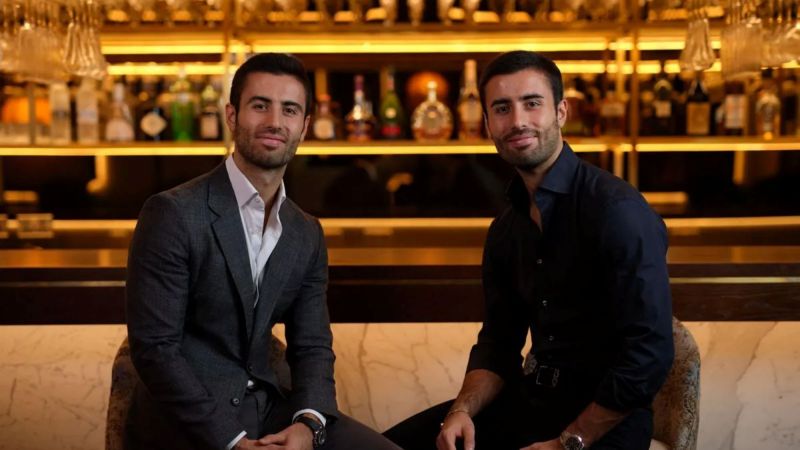
Alberto and Arian Zandi
Opinions expressed by Entrepreneur contributors are their own.
You're reading Entrepreneur United Kingdom, an international franchise of Entrepreneur Media.
Alberto Zandi did not set out to build a hospitality group. When he arrived in the UK from Madrid at the age of 18, the plan was very different. He came to study business, finance and computer science, not to create a restaurant empire. Hospitality was never the original destination. Yet just over a decade later, Alberto is the co-founder of Emerald Hospitality Group, one of the UK’s fastest growing private companies, recognised in The Sunday Times 100. The business operates multiple luxury restaurant brands, employs hundreds of people, works with a major international financial institution, and has become one of the most closely watched hospitality groups in the country. Alberto himself has also been recognised by Forbes 30 Under 30.

The path from a young student newly arrived in London to one of the country’s most closely watched young entrepreneurs has not been linear. It has moved through finance, strategy consulting, international expansion, personal pressure, loyalty, discipline, and a series of decisions taken long before most people have even begun to understand the shape of their professional lives. What connects it all is not food alone. It is timing. It is conviction. It is resilience. It is systems. And, increasingly, it is meaning. “We never thought of ourselves as traditional restaurateurs,” Alberto says. “We are entrepreneurs. Hospitality is the industry we chose because it is one of the most powerful ways to make people feel something.”
A beginning built on pressure
Alberto and his twin brother Arian moved from Madrid to the UK as teenagers. They studied business management and computer science, an academic path that included UCL and The London School of Economics. Both were ambitious, academically driven and used to moving quickly. But life in London became difficult early. After an initial period of financial support from their father, the relationship broke down. The brothers had to become financially independent almost overnight. Tuition fees, rent and daily life in one of the most expensive cities in the world had to be covered without the safety net they had expected. “We stopped having a relationship,” Alberto says. “I still do not have a relationship with him. It has been 12 years.” It was a painful period, but also a deeply formative one. There was no time to wait for perfect conditions. They had to work, study and survive at the same time. Alberto secured a role at a financial institution. Arian joined a telecom company. Both were still students, but they were already being exposed to the realities of corporate life. Very quickly, they realised that the traditional corporate ladder was not where they would build their future. “We quickly understood that the conventional corporate world was not for us,” Alberto says. “The bureaucracy, the pace, the layers of approval. We wanted to build, test, fail, learn, and grow at pace, not wait.” That period revealed something that would define Alberto’s next decade: pressure did not slow him down. It sharpened him.
A freezing night in London
The first major turning point came through a dinner in London. Arian introduced Alberto to Livio Bettoschi, one of the founders of a major European consulting firm with international operations. The meeting took place on a freezing January night. They were sitting outside. “It was freezing,” Alberto remembers. “But I was completely compelled by him. He had built something huge, but he still had the energy of someone who was building every day. I remember thinking, this is someone I want to learn from.” At the time, Livio’s consulting group employed thousands of people and generated hundreds of millions in revenue. For Alberto, still only 19, the encounter represented more than a job opportunity. It was proximity to scale. It was proximity to ambition. It was proximity to someone who had built something real, and to all the lessons that would come with it.
Within weeks, both brothers left their corporate roles and joined Livio’s firm as business analysts. The salaries were modest, but the exposure was extraordinary. They were placed inside a global consulting environment that operated across industries, markets and continents. It was a large company, but it still had the urgency and energy of a start up. For the brothers, it became a school of strategy, structure and execution. They learned how large organisations worked. They learned how transformation projects were sold. They learned how decisions were made at the highest levels. They learned how to handle pressure, how to listen, how to observe, and how to think commercially before speaking. And, importantly, they learned how systems and processes could change the performance of entire companies. Then came Iran.
The Iran window
In 2016, the Obama administration signalled a temporary easing of sanctions on Iran under the nuclear agreement. For international businesses, this created a rare opening into a major market that had been largely closed for decades. For Alberto and Arian, it was a strategic opportunity. “We thought there must be something there,” Alberto says. That night, they began researching the Iranian economy. They mapped key industries, senior executives, financial organisations, pharmaceutical groups and automotive companies. They built a picture of a market that was opening faster than most companies were prepared for. They presented their research to Livio. His question was simple: what do you want? Their answer was bold. They wanted to create their own company and be paid as an independent commercial partner, not as employees. They believed that if they could open the right doors, understand the market, build trust, and create commercial value, the opportunity could be significant. The request also included a substantial financial package, the kind normally reserved for very senior executives in the corporate world. Their ask was bold, but so was the opportunity they proposed. Livio took the proposal to the company’s headquarters in Italy. Weeks later, he came back with questions. How could the arrangement be justified? Why should two young analysts be given that level of responsibility? Alberto’s response was direct. “We are not going to be employees anymore,” he told him. “You are not paying us as individuals. You are paying a company.” Livio agreed. The arrangement proved significant almost immediately. As part of the Iran opportunity, both brothers were paid handsomely, each earning high six figure compensation at an age when most of their peers were still trying to secure graduate roles. But the money, while important, was not the real lesson. What mattered more was the understanding that commercial value could be created through timing, courage, intelligence, positioning, trust, and the ability to operate in complex markets. The brothers, still in their early twenties, began helping secure access to major organisations in Iran across multiple sectors. Several introductions developed into commercial agreements worth millions in annual revenue. It was an early lesson in confidence, commercial judgement and execution.
“We were very naive, at the end of the day we were only 20 years old,” Alberto says. “But sometimes naivety is an advantage. We did not know all the reasons it could not work, so we just tried. Most barriers to doing something are in one’s head. A young mind often sees fewer barriers than an adult mind. When I think of our ask back then, I think of it with pride but also humour, because I do not know if now I would be able to be as bold with the same request.” The window did not stay open for long. As Donald Trump’s election campaign signalled a shift in US policy towards Iran, the opportunity began to narrow. The brothers realised they needed a new path. They went back to Livio with another proposal. “You have seen our commercial skills in a market like Iran,” they told him. “Now we want to learn how to compete in mature, competitive markets like the UK. To do that, we need to become the best consultants we can be. Put us on your most strategic projects.” It was not a request for comfort. It was a request for difficulty. Livio agreed again. For the next two years, Alberto and Arian worked across international consulting projects in Dubai, Istanbul, Milan and several African markets, including Nigeria, Ghana, and Zambia. The work focused mainly on telecoms digital transformations. It was an education in systems at scale. It was also a period that built a loyalty in Alberto that has stayed with him. He speaks about Livio not only as a professional influence, but as someone who gave two young men an opportunity before the world had given them credibility. That sense of loyalty, to people who believed early, would later shape the way Alberto and Arian built teams, partnerships and businesses.
London and the hospitality thesis
When the brothers returned to London, the context had changed again. In emerging markets, they had learned how to identify opportunities quickly. In consulting, they had learned how large companies operated. In mature markets, they now needed to understand how to build something of their own. They began selling consulting services into companies they already knew. Commercially, it worked. But emotionally and creatively, it was not enough. They wanted to build something tangible. They began studying industries through the same consulting lens they had used elsewhere. One pattern became clear. Across sectors, the most valuable companies were no longer simply selling products or services. They were selling experiences. Consumers wanted emotion. They wanted consistency. They wanted identity. They wanted brands that made them feel part of a world. At the lower end of hospitality, brands such as McDonald’s and Starbucks had mastered operational consistency. They could deliver the same experience almost anywhere in the world. At the higher end, luxury restaurants had mastered creativity, atmosphere and taste, but rarely scalability. Most high end restaurants were still single site businesses, often led by chefs, intuition and emotion rather than systems, data and operational infrastructure. “What McDonald’s has is not chefs,” Alberto says. “It has systems.” That insight became the foundation of Emerald Hospitality Group. Alberto and Arian believed there was an opportunity to bring corporate discipline, data, structure and systems into luxury hospitality without destroying the emotion that makes restaurants magical. They did not want to remove the art from hospitality. They wanted to make the art scalable.
Emerald Hospitality Group
The first Emerald Hospitality Group restaurants were deliberately different from each other. Zuaya brought Latin American energy and immersive design to Kensington. Como Garden was inspired by the romance and elegance of Lake Como. El Norte introduced a luxury Spanish concept in Mayfair. Riviera, in St James’s, created a multi level restaurant inspired by the South of France. The strategy was not to build one restaurant and replicate it endlessly. It was to build a portfolio of distinct brands, each designed for a different customer, occasion and real estate opportunity. This was strategic. “One of the biggest barriers to scaling restaurants is real estate,” Alberto explains. “If you only have one brand, you need to find exactly the right site for that brand every time. But if you have several brands, you can look at an asset and ask which concept fits best.” That flexibility became one of the group’s greatest strengths. Emerald Hospitality Group now employs hundreds of people, operates several brands, and is expanding through new openings and international projects. The group is also developing larger scale concepts, including major multi concept venues backed by significant investment. The company is projected to generate over £20m in revenue, with what Alberto describes as healthy margins for an industry known for pressure, volatility and low profitability. But his language remains more strategic than culinary. “We are entrepreneurs,” he says. “Not restaurateurs.” That distinction matters. For Alberto, the restaurant is not only a place to eat. It is a carefully designed system of experience, memory, emotion, operations, finance, people and brand.
The balance between art and business
Emerald’s growth is built around an idea that Alberto returns to often: hospitality lives at the intersection of business and art. Too much business, and the guest experience becomes cold. Too much art, and the business becomes financially unsustainable. “The magic is in the balance,” he says. “If you become too focused on spreadsheets, you lose the soul. If you become too focused on creativity without structure, you cannot survive.” This balance is also what allowed the group to attract institutional support. In an industry where many operators struggle with consistency and financial discipline, Emerald presented hospitality through the language of infrastructure, reporting, systems, controls and scalable brands. That approach helped convince a major financial institution to support the group’s next phase of growth. It also shaped the way Alberto thinks about leadership. At 30, he is no longer simply building restaurants. He is building a company that can operate beyond him. That has meant strengthening the group’s headquarters, hiring senior leaders across operations, HR, finance and marketing, and moving himself gradually from day to day operational involvement into a more strategic role. For many founders, that transition is difficult. For Alberto, it is necessary. “If the business only works when I am in every detail, then I have not built a business,” he says. “I have built a job for myself.” It is a revealing line. Behind the ambition is a discipline that is sometimes less visible than the restaurant openings, the press coverage, or the awards. Alberto is not only interested in building what can be seen. He is focused on building the infrastructure beneath it. That is where he believes real longevity is created.
The human cost of building
Success has come quickly, but Alberto does not speak about it as if it has been easy. He talks openly about the emotional intensity of building a business from a young age. A company in its early stages, he says, is a living thing. It changes daily. It gives you hope in the morning and anxiety by the evening. It can make you feel powerful and fragile on the same day. One of his biggest personal lessons has been learning not to identify completely with the business. “In the early stages, a start-up is a living thing,” he says. “It has ups and downs every day. If you identify yourself completely with it, you become emotionally unstable. I had to learn that the business is one thing, and I am another.” That separation, he believes, has made him a better decision maker and a healthier person. It has also made him more reflective about success. Recognition from Forbes and The Sunday Times matters, but Alberto is careful not to confuse awards with identity. They are markers. They are not the destination. “The danger is thinking that once you get there, everything will make sense,” he says. “But there is always a new there. There does not really exist. There is only here.” It is this more human understanding of ambition that would eventually become central to his next major project.
Thriving Minds
While Emerald Hospitality Group expanded physically, another part of Alberto’s life began expanding digitally. In 2024, he launched a podcast originally focused on early stage founders, interviewing entrepreneurs recognised on Forbes 30 Under 30. The idea was born from a personal question. What is success? And why had the world’s definition of it become so unhealthy? “I felt the definition of success had become distorted,” he says. “Too much money, too much speed, too much comparison. People were building a very unhealthy relationship with ambition before they had even started.” The podcast quickly grew. Within a year, it had nearly 200,000 subscribers. It later evolved into Thriving Minds, expanding beyond entrepreneurship into health, neuroscience, nutrition, sport, psychology, entertainment, performance and personal growth. The mission became broader and more emotional: to help people unlock the best version of themselves. Today, Thriving Minds has surpassed 1 million subscribers and is one of Europe’s fastest growing personal growth podcasts. Alberto has interviewed some of the world’s leading founders, doctors, scientists, athletes, actors, and artists. The show has become, in his words, “a conversation about the human behind the success.” Often, the episodes move beyond achievement into vulnerability, identity, pressure, failure, relationships, health, trauma and meaning. “Sometimes I think Thriving Minds is more of a therapy room than a podcast,” he says. “People come in to talk about success, but what often matters most is the cost, the pain, the lessons and the humanity behind it.” The podcast has also led to a book deal with Simon & Schuster for a forthcoming work on entrepreneurship and personal development. For Alberto, the media platform is not separate from his entrepreneurial identity. It is the next expression of it. At Emerald Hospitality Group, we reach hundreds of thousands of guests annually, after eight years of very hard work. At Thriving Minds, we reach millions, after two years of very hard work. Both are systems of attention. Both can create memories. Both can make people feel less alone.
From hospitality to human growth
There is a through line between Emerald Hospitality Group and Thriving Minds. In hospitality, Alberto creates spaces where people can escape, connect and remember. In media, he creates conversations where people can reflect, learn and grow. Both are built around experience. Both are built around emotion. Both are built through systems. “Some of the best memories of my life are around a dining table,” he says. “That is why hospitality matters. You are not just serving food. You are creating moments people remember.” But his ambitions are now broader than business alone. Health, wellness, mental health and personal growth are becoming central to the next phase of his life and work. He still speaks with the intensity of a builder, but with a more reflective understanding of what success can cost. The younger Alberto wanted to build. The current Alberto still wants to build, but he also wants to understand why. This evolution has not made him less ambitious. It has made the ambition more precise. He wants Emerald Hospitality Group to become a leading international hospitality platform. He wants Thriving Minds to become the number one personal growth podcast in the world. He wants his book to help young entrepreneurs build healthier relationships with success, failure and themselves. The scale remains. But the purpose has become clearer.
The ordinary place
The mythology of entrepreneurship often begins with certainty. Alberto’s story begins with pressure, loyalty, naivety, hard work and the willingness to try. No family safety net. No hospitality background. No perfect plan. Just two brothers who moved quickly, learned aggressively and kept placing themselves in rooms where they were younger and less experienced than everyone else. “One of the most important things I have learned is that you can create something extraordinary from a very ordinary place,” Alberto says. “No money, no network, no perfect background. Just a dream, and the willingness to work until something changes.” That belief now sits at the centre of his work. Emerald Hospitality Group continues to expand, with new restaurants and international openings ahead. Thriving Minds continues to grow, with the ambition of becoming the number one personal growth podcast in the world. His book will add another layer to the same mission. At 30, Alberto Zandi is still building. But what he is building has changed. It is no longer only about business, revenue or recognition. It is about creating systems that help people feel something. A table that helps someone forget the world for a few hours. A conversation that helps someone understand themselves better. A business that gives people jobs, training, purpose and opportunity. A platform that reaches millions with ideas that can change how they live. The story began with a 19 year old sitting outside on a freezing London night, saying yes to something he did not fully understand. More than a decade later, that instinct remains. “We were very naive,” he says. “But we just did not quit.” And perhaps that is the real system behind everything he has built. Not certainty. Not perfection. But movement. The courage to begin before the blueprint exists. And the discipline to keep building until the world catches up.
Alberto Zandi did not set out to build a hospitality group. When he arrived in the UK from Madrid at the age of 18, the plan was very different. He came to study business, finance and computer science, not to create a restaurant empire. Hospitality was never the original destination. Yet just over a decade later, Alberto is the co-founder of Emerald Hospitality Group, one of the UK’s fastest growing private companies, recognised in The Sunday Times 100. The business operates multiple luxury restaurant brands, employs hundreds of people, works with a major international financial institution, and has become one of the most closely watched hospitality groups in the country. Alberto himself has also been recognised by Forbes 30 Under 30.
The path from a young student newly arrived in London to one of the country’s most closely watched young entrepreneurs has not been linear. It has moved through finance, strategy consulting, international expansion, personal pressure, loyalty, discipline, and a series of decisions taken long before most people have even begun to understand the shape of their professional lives. What connects it all is not food alone. It is timing. It is conviction. It is resilience. It is systems. And, increasingly, it is meaning. “We never thought of ourselves as traditional restaurateurs,” Alberto says. “We are entrepreneurs. Hospitality is the industry we chose because it is one of the most powerful ways to make people feel something.”
A beginning built on pressure
Alberto and his twin brother Arian moved from Madrid to the UK as teenagers. They studied business management and computer science, an academic path that included UCL and The London School of Economics. Both were ambitious, academically driven and used to moving quickly. But life in London became difficult early. After an initial period of financial support from their father, the relationship broke down. The brothers had to become financially independent almost overnight. Tuition fees, rent and daily life in one of the most expensive cities in the world had to be covered without the safety net they had expected. “We stopped having a relationship,” Alberto says. “I still do not have a relationship with him. It has been 12 years.” It was a painful period, but also a deeply formative one. There was no time to wait for perfect conditions. They had to work, study and survive at the same time. Alberto secured a role at a financial institution. Arian joined a telecom company. Both were still students, but they were already being exposed to the realities of corporate life. Very quickly, they realised that the traditional corporate ladder was not where they would build their future. “We quickly understood that the conventional corporate world was not for us,” Alberto says. “The bureaucracy, the pace, the layers of approval. We wanted to build, test, fail, learn, and grow at pace, not wait.” That period revealed something that would define Alberto’s next decade: pressure did not slow him down. It sharpened him.

Patricia Cullen • Features Writer
Entrepreneur Staff