Breaking the Pattern
The Navigate Ventures founder Ivan Nikkhoo explains why team, timing, and capital efficiency—not hype – are the true drivers of early-stage success.
Navigate Ventures
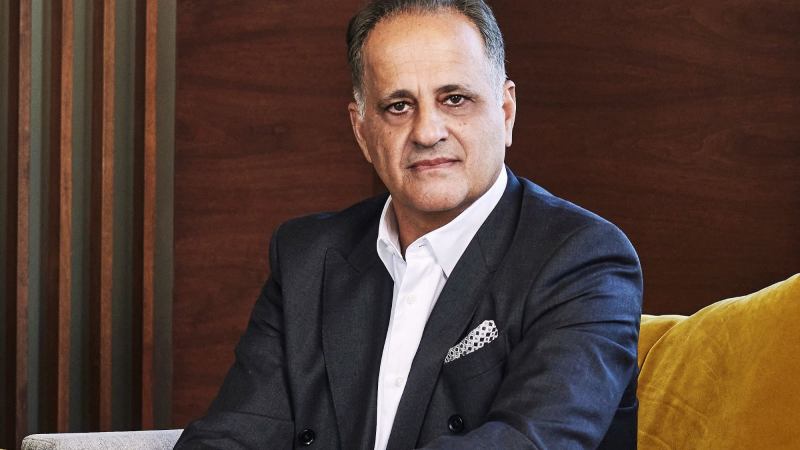
Ivan Nikkhoo, founder and managing partner of Navigate Ventures
Opinions expressed by Entrepreneur contributors are their own.
You're reading Entrepreneur United Kingdom, an international franchise of Entrepreneur Media.
Ivan Nikkhoo has built a career on looking beyond the noise of Silicon Valley to find and back B2B SaaS founders who are solving real problems. As founder and managing partner of Navigate Ventures, he’s focused on companies that combine deep industry insight with disciplined execution. In this conversation with Entrepreneur UK, Nikkhoo shares why timing can be just as critical as talent, why underfunding is the silent killer of promising start-ups, and how founders can turn every “no” into a future “yes.
What are the top three things founders should focus on when preparing to raise their first round of funding?
Team, timing, and deep understanding of the problem they’re solving. When I say team, I mean founders who aren’t just technically brilliant but who genuinely understand the industry they’re entering. I see too many solutions looking for problems, rather than people who’ve lived a problem and know exactly how to solve it efficiently. Timing matters enormously – not just market timing, but operational timing. Are you raising when you can demonstrate clear progress but still have 12-18 months of runway ahead of you?
When evaluating early-stage start-ups, what key factors do you prioritize?
Team, their ability to achieve product-market fit efficiently, potential for scalability, and getting to the next round successfully. What really counts is whether they can hit the metrics that growth investors want to see. We’ve learned that the biggest determinant of Series A success is actually the total amount of seed funding a company raises – companies that underfund themselves often struggle to reach the benchmarks investors expect.
How should founders handle a “no” from an investor?
Very politely ask why and what they can improve, then actually implement the feedback and follow up months later with tangible progress. Most founders ask this question and then disappear. The smart ones take the feedback seriously and maintain the relationship professionally. A “no” today isn’t necessarily a “no” forever – market conditions change, businesses evolve, and investors’ priorities shift.
What’s the best way to build long-term relationships, even if they don’t secure investment straight away?
Provide regular progress reports and consistently exceed the expectations you set. The best founders send quarterly updates that are honest about challenges but demonstrate clear progress against metrics that matter. What excites me most is when founders proactively seek advice on specific challenges rather than just broadcasting good news – it shows they’re building a network of advisers strategically.
What start-up sector or trend excites you the most at the moment, and why?
More capital-efficient startups in AI-enabled vertical SaaS. We’re seeing companies achieve the same growth trajectories as previous generations but with significantly less capital requirement. AI isn’t just a marketing tool for these companies – it’s a genuine productivity multiplier that creates better unit economics and enables smaller teams to tackle enterprise problems that previously required much larger organisations.
Which three start-ups that you funded this year excite you the most – and why?
North.cloud – They’ve achieved remarkable capital efficiency, growing from zero to $6 million ARR in just 14 months while helping enterprise clients achieve up to 50% savings on cloud spend. It’s exactly the kind of AI-enabled platform that solves real enterprise problems.
Videate – An AI platform that automatically generates and updates software training videos. Every large enterprise struggles with keeping training content current, and Videate solves this universal pain point for companies like Asana and AppFolio.
Preveta – AI-enabled care navigation for specialty healthcare clinics. They’re transforming how oncology and urology practices manage patient data, turning EMR information into actionable clinical insights. It’s AI solving critical real-world problems in traditional industries.
Ivan Nikkhoo has built a career on looking beyond the noise of Silicon Valley to find and back B2B SaaS founders who are solving real problems. As founder and managing partner of Navigate Ventures, he’s focused on companies that combine deep industry insight with disciplined execution. In this conversation with Entrepreneur UK, Nikkhoo shares why timing can be just as critical as talent, why underfunding is the silent killer of promising start-ups, and how founders can turn every “no” into a future “yes.
What are the top three things founders should focus on when preparing to raise their first round of funding?
Team, timing, and deep understanding of the problem they’re solving. When I say team, I mean founders who aren’t just technically brilliant but who genuinely understand the industry they’re entering. I see too many solutions looking for problems, rather than people who’ve lived a problem and know exactly how to solve it efficiently. Timing matters enormously – not just market timing, but operational timing. Are you raising when you can demonstrate clear progress but still have 12-18 months of runway ahead of you?
When evaluating early-stage start-ups, what key factors do you prioritize?
Team, their ability to achieve product-market fit efficiently, potential for scalability, and getting to the next round successfully. What really counts is whether they can hit the metrics that growth investors want to see. We’ve learned that the biggest determinant of Series A success is actually the total amount of seed funding a company raises – companies that underfund themselves often struggle to reach the benchmarks investors expect.