Win Without Risk
SafeBets aims to reshape prediction markets without requiring users to risk money.
SafeBets
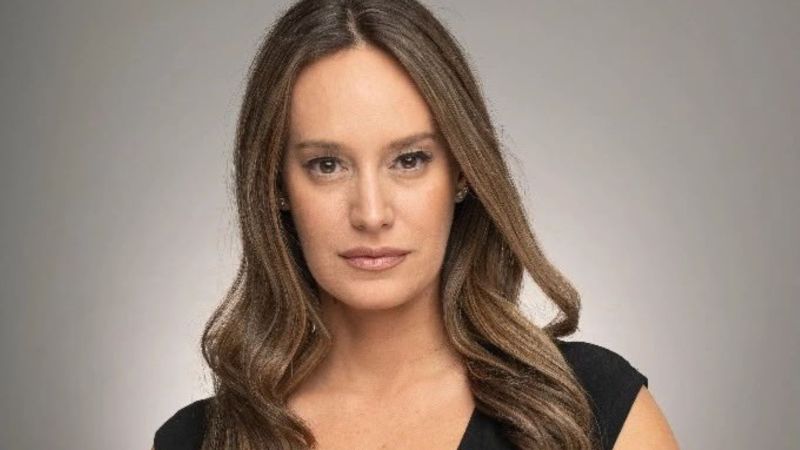
Gina Antoniello, Chair of the Board of SafeBets
Opinions expressed by Entrepreneur contributors are their own.
You're reading Entrepreneur United Kingdom, an international franchise of Entrepreneur Media.
Every other prediction platform asks you to risk money to make money. Gina Antoniello leads the one that doesn’t. And it may be the only one British users can legally use.
Imagine a financial product that pays you when you are right about the markets and asks for nothing when you are wrong. No deposit. No wager. No money on the table. Just a return on accuracy. It sounds like a marketing pitch. It is, in fact, the central idea behind SafeBets.world, a New York-based prediction platform launched in April 2026. And it may be the first product of its kind with a credible path to operating in the United Kingdom.
For years, the world’s most-discussed prediction platforms, Polymarket and Kalshi, have been off-limits to British users. Both block UK IP addresses. Kalshi did not even bother to include Britain in its 140-country international rollout last autumn. Polymarket geoblocks every British IP it sees. The reasons are familiar to anyone who has read a financial-services prospectus: the Financial Conduct Authority does not allow the kind of fixed-payout contracts these platforms run, and the Gambling Commission treats the whole category as betting that requires a licence neither company holds. Which has left the British market in an odd position. The fastest-growing consumer financial category in the world has, until now, not been allowed to do business here.
Predictions as the product, not the bet
The chairwoman behind SafeBets is Gina Antoniello, and she built the platform from a single contrarian question: what if predictions were the product, not the wager? Conventional prediction platforms make their money the way bookmakers do. Users place bets on outcomes. The platform takes a cut. Some users win. Most lose. The economics depend on a steady churn of losing bettors. It is a structure that has built two companies with a combined valuation north of thirty billion dollars. It is also a structure that almost no European regulator will tolerate at consumer scale.
Antoniello’s insight was that the value in a prediction market does not actually sit with the bettors. It sits with the small number of users who are consistently right. Conventional platforms had been monetising the wrong side of the transaction. “The architecture is the regulatory position,” Antoniello has said in interviews. It is the kind of one-liner that gets repeated in industry press, and it is also the design principle of the platform. SafeBets does not need users to lose because it does not make its money from them.
How it actually works
Users predict where prices are going on real public markets. Bitcoin, oil, the FTSE 100, the dollar. Correct predictions earn rewards. Incorrect predictions cost nothing. There is no deposit and no balance to drain. A new user can sign up and start predicting without funding an account. Behind the scenes, SafeBets aggregates the forecasts of its most consistently accurate users into what Antoniello calls a Collective Intelligence signal, a continuously refined consensus of skilled predictors. Affiliated trading desks then deploy that signal in real public markets. The trading profits fund the user rewards. About half flows back to the predictors. The rest funds the platform. In its plainest form, SafeBets is a financial platform that pays for analytical accuracy, sourced from anywhere in the world. That is a meaningfully different proposition from anything currently available in the UK retail market. It is closer to what Uber did for driving and Airbnb did for spare rooms than to anything you would find in a Hargreaves Lansdown account. The skill has always existed. The platform to monetise it, at scale, for anyone with the talent, has not.
The architect
Antoniello will tell you the model was the easy part. The harder part was convincing her own team that the entire industry had been thinking about prediction markets wrong. Most fintech founders who target a regulated category spend the first two years navigating it, lobbying for carve-outs, and structuring around restrictions. Antoniello took a different view. If the regulations existed to prevent consumers from losing money to wagering platforms, why build a wagering platform at all? Why not build something the regulations were never designed to address? “We did not navigate the regulatory wall,” she told the California Business Journal earlier this year. “We went around it entirely.”
Going around the wall meant accepting that conventional prediction markets, even the ones with multibillion-dollar valuations, were a dead end for mass-market consumer scale in the world’s major regulated economies. It meant designing a different revenue model from the start. And it meant treating the predictions, not the bets, as the asset worth building a company around. The bet Antoniello has made is that this approach unlocks markets nobody else can reach. The United Kingdom is the most immediate test case.
What it could mean for British forecasters
For UK entrepreneurs, analysts, and forecasters, the SafeBets arrival matters in two specific ways. The first is access. The prediction-market category has produced two of the most-discussed financial products of the past three years and Britain has been shut out of both. SafeBets is, on its current architecture, the only platform with a credible structural answer to British regulators’ concerns. The second is opportunity. SafeBets has published a target of one hundred thousand top predictors earning six-figure annual incomes from the platform by 2030. That is not a side-hustle figure. It is a livelihood-grade compensation structure for analytical skill, with no capital required to start. The implication for British users is straightforward. If you are good at reading markets, the platform is designed to pay you for it. That is a structural innovation worth taking seriously. The UK has never produced a consumer financial product that pays for accuracy alone, with no down-side capital exposure for the user. Spread betting is the closest analogue, and it pays for being right while penalising being wrong. SafeBets pays for being right and does nothing when you are wrong.
The window
Whether the UK opportunity actually opens depends on a few things outside Antoniello’s control. British regulators will form their own view of the structure. UK consumers will decide whether a category they have not previously had access to is one they want to participate in. The trading desks behind the Collective Intelligence signal will have to perform at scale.
None of those are settled. But the window itself is real. Polymarket cannot legally enter. Kalshi has chosen not to try. And SafeBets is the only platform whose model is built for exactly the kind of jurisdiction the UK is: sophisticated, regulated, sceptical of consumer wagering products, and open to financial products that do not put consumer capital at risk. The question for British forecasters watching the prediction-market category emerge globally is no longer whether they can participate. It is whether they will participate in time to be among the first generation of skilled predictors paid for the skill itself. “‘Win Without Risk’ is not a marketing line,” Antoniello insists. “It is what the architecture actually does.”
For a category that has spent five years being told by European regulators it cannot do business at consumer scale, an architecture that does not need permission is a significant proposition. SafeBets is not the platform that won the regulatory argument. It is the platform that decided not to have the argument in the first place. If Antoniello is right, that may turn out to be the only structural argument that mattered.
Every other prediction platform asks you to risk money to make money. Gina Antoniello leads the one that doesn’t. And it may be the only one British users can legally use.
Imagine a financial product that pays you when you are right about the markets and asks for nothing when you are wrong. No deposit. No wager. No money on the table. Just a return on accuracy. It sounds like a marketing pitch. It is, in fact, the central idea behind SafeBets.world, a New York-based prediction platform launched in April 2026. And it may be the first product of its kind with a credible path to operating in the United Kingdom.
For years, the world’s most-discussed prediction platforms, Polymarket and Kalshi, have been off-limits to British users. Both block UK IP addresses. Kalshi did not even bother to include Britain in its 140-country international rollout last autumn. Polymarket geoblocks every British IP it sees. The reasons are familiar to anyone who has read a financial-services prospectus: the Financial Conduct Authority does not allow the kind of fixed-payout contracts these platforms run, and the Gambling Commission treats the whole category as betting that requires a licence neither company holds. Which has left the British market in an odd position. The fastest-growing consumer financial category in the world has, until now, not been allowed to do business here.