Tales from the Trenches
In a world where AI dominates headlines and Silicon Valley sets the pace for innovation, one UK entrepreneur is leading a quiet revolution.
Faculty
Opinions expressed by Entrepreneur contributors are their own.
You're reading Entrepreneur United Kingdom, an international franchise of Entrepreneur Media.
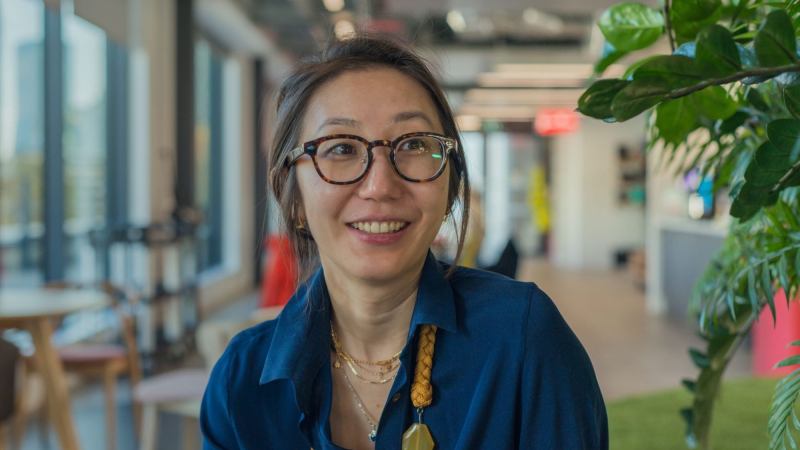
Angie Ma, co-founder of Faculty, a London-based company focused on applying artificial intelligence (AI) to solve real-world problems is not just shaping the future of AI – she’s driving real-world impact with groundbreaking technology and a relentless commitment to change. Her journey from academia to entrepreneurship, her triumphs, and her lessons in resilience, offer valuable insights for today’s aspiring business leaders.
From PhD to Start-Up
Ma’s entry into the world of AI was anything but ordinary. A PhD student with an interest in AI safety, she was introduced to the field through a chance encounter with the founders of DeepMind. It was here that Ma first glimpsed AI’s transformative potential. “My AI journey started almost two decades ago having been introduced to AI by the DeepMind founders during my PhD,” she explains. Back then, the future of AI was a distant concept, one that would soon shape industries and society at large.
By 2013, Ma was ready to leave academia behind. Inspired by a US programme helping academics pivot to commercial roles, she and her co-founder Marc Warner decided to replicate the model in the UK, founding Faculty. “Faculty quickly evolved into something much bigger – making AI work for real-world impact,” Ma says. What started as a data science venture soon expanded into a far-reaching mission: using AI to solve problems in the real world, from improving public services to enhancing workforce productivity.
The Hidden Struggles of Entrepreneurship
Building a business from scratch is never easy, and for Ma, the journey was riddled with challenges. “Building Faculty was the hardest thing I’ve ever done,” she admits. From facing self-doubt to navigating cultural expectations, Ma encountered obstacles that would have deterred many entrepreneurs. Coming from a traditional Chinese family, she struggled with the idea of a start-up being a legitimate career path. “I initially struggled with external expectations, particularly from my traditional Chinese family, where start-ups weren’t seen as a viable path,” Ma reflects.
The tension between following her passion and meeting family expectations was a constant battle. But Ma found a turning point when she started aligning her decisions with her personal values. “Learning to align my choices with my own values rather than external pressures was a turning point,” she says. This shift in mindset enabled her to embrace entrepreneurship fully and pursue Faculty’s mission with clarity.
Another key challenge was securing investor backing, which Ma initially believed was hindered by gender bias. But in true entrepreneurial fashion, she reframed the issue. “I realised it wasn’t about bias alone but a skills gap in pitching and selling,” she admits. By improving her communication and presentation skills, she turned a perceived disadvantage into a powerful strength, ultimately securing the necessary funding to fuel Faculty’s growth.
AI and the UK Economy
As AI becomes central to global economic strategies, Ma sees a unique opportunity for the UK to regain its competitive edge. “AI is increasingly seen as one of the few tools that can help the UK remain competitive,” Ma says, highlighting the importance of AI in boosting productivity and driving economic growth. For Ma, however, the stakes are higher than simply improving business performance. “The technology will play a huge part in improving public service delivery, as well as boosting workforce productivity – but it must only be used in a safe, connected and human-first way.”
Her commitment to ensuring AI is deployed responsibly reflects a broader trend in the industry: companies that are not only focused on innovation but on how that innovation will affect people’s lives. Faculty, under Ma’s leadership, has embraced this responsibility, aiming to make AI work for societal good while navigating the complex ethical landscape of emerging technologies.
Faculty’s Innovation Mindset
Staying ahead in AI means pushing the boundaries of what’s possible – and challenging conventional wisdom. A standout moment in Faculty’s journey came in 2018 when the UK government called for a more aggressive stance against extremist content online. Where many tech giants balked at the challenge, Faculty stepped up. “Tech giants said it couldn’t be done. But Faculty proved otherwise, developing AI that could detect and remove extremist content within two hours,” Ma says with pride.
This achievement, which included a 94% success rate and minimal false positives, was a testament to Faculty’s ability to deliver innovative, real-world solutions. It also underscored Ma’s approach: challenge assumptions, iterate quickly, and build AI that solves urgent, operational problems. For Ma, this mindset is what drives Faculty’s success. “That mindset – challenging assumptions, iterating rapidly, and building AI for real-world operational needs – drives real innovation and keeps us ahead,” she says.
The Human Element of AI
In the fast-paced world of AI, it’s easy to get caught up in the technology. But for Ma, the key to Faculty’s success lies in its people and culture. “We foster curiosity and fast learning to keep pace with rapid developments, but equally prioritise collaboration, communication, and empathy,” Ma explains. For Faculty, balancing technical expertise with strong interpersonal skills has been essential to building a cohesive, innovative team.
Ma emphasises that human-centric values are just as important as technical skills when it comes to creating AI systems that are both trusted and impactful. “Strong people skills are non-negotiable – our teams need to work seamlessly together and with customers to create AI systems that are trusted, user-first, and impactful,” she says. By embedding these values into Faculty’s hiring practices and daily operations, Ma has cultivated an environment where innovation thrives, and AI is developed with a genuine focus on solving real-world problems.
Entrepreneurial Wisdom
For those contemplating starting a business in the UK today, Ma’s advice is grounded in years of experience and hard-won lessons. Reflecting on her own uncertainties as a young entrepreneur, she encourages others to embrace the journey, no matter how uncertain it may seem at the start. “I vividly recall the uncertainty I felt in my early 20s, unsure of my direction, worried about making mistakes, and fearing I’d make the wrong choices,” she says.
Now, looking back from her mid-40s, Ma offers three key pieces of advice to aspiring entrepreneurs:
- Embrace the journey: Entrepreneurship is not a destination but a process. “It’s a process everyone is going through, albeit in different ways,” Ma says.
- Learn from mistakes: Mistakes are a crucial part of growth. “Aim to avoid mindless errors and not to repeat the same mistakes,” Ma advises.
- Seek guidance: Ask for help, find mentors, and never stop learning. “Starting a career can be daunting, but with the right mindset and support, it becomes a rewarding journey of purpose, growth, and friendship.”
Ma’s story is one of determination, innovation, and a commitment to using AI for the greater good. As Faculty continues to lead the charge in AI development, Ma remains focused on ensuring that the technology serves humanity. Her entrepreneurial journey is a testament to the power of perseverance, and her advice offers a valuable roadmap for anyone looking to make an impact in today’s rapidly changing world.
For UK-based entrepreneurs, Ma’s path underscores a crucial truth: success isn’t just about having a brilliant idea; it’s about building a company that can evolve, adapt, and ultimately make a difference. Whether through tackling global challenges like extremist propaganda or building AI systems that improve public services, the future is bright for those who embrace innovation with purpose – and with humanity at the centre of it all.
Angie Ma, co-founder of Faculty, a London-based company focused on applying artificial intelligence (AI) to solve real-world problems is not just shaping the future of AI – she’s driving real-world impact with groundbreaking technology and a relentless commitment to change. Her journey from academia to entrepreneurship, her triumphs, and her lessons in resilience, offer valuable insights for today’s aspiring business leaders.
From PhD to Start-Up
Ma’s entry into the world of AI was anything but ordinary. A PhD student with an interest in AI safety, she was introduced to the field through a chance encounter with the founders of DeepMind. It was here that Ma first glimpsed AI’s transformative potential. “My AI journey started almost two decades ago having been introduced to AI by the DeepMind founders during my PhD,” she explains. Back then, the future of AI was a distant concept, one that would soon shape industries and society at large.
By 2013, Ma was ready to leave academia behind. Inspired by a US programme helping academics pivot to commercial roles, she and her co-founder Marc Warner decided to replicate the model in the UK, founding Faculty. “Faculty quickly evolved into something much bigger – making AI work for real-world impact,” Ma says. What started as a data science venture soon expanded into a far-reaching mission: using AI to solve problems in the real world, from improving public services to enhancing workforce productivity.