Trident Media Group’s Mark Gottlieb: Can Storytelling Survive the Age of AI, or Will It Be Redefined by It?

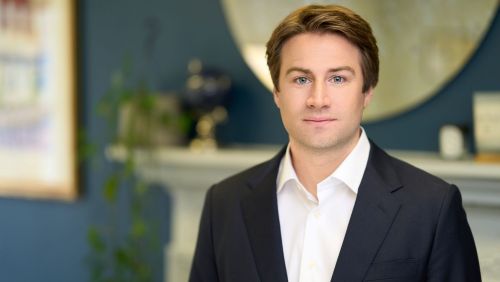
Mark Gottlieb, Executive Vice President of Trident Media Group
The debate around artificial intelligence has split industries into opposing teams, and nowhere can that tension feel more personal than in the creative world. Questions about efficiency give way to something deeper: ownership, and the fragile yet enduring connection between storyteller and audience.
Mark Gottlieb, a literary agent and Executive Vice President of Trident Media Group, reflects on this moment with realism and pragmatism. Instead of treating AI as either an existential threat, he frames it as an inevitability that demands careful stewardship. “AI has become ubiquitous. It’s everywhere around us, even if we can’t see it. At this point, it would be very difficult for society to function without it. The real question isn’t whether it exists, but how we choose to work within its framework,” he says.
The existing AI framework, however, has not emerged without friction. Mark Gottlieb notes that early iterations of AI systems were trained on vast bodies of written work, often without the consent of the authors who created them. According to a survey, 96% of people stated that they had not given permission for AI models to be trained using their work. Legal challenges, too, have risen, with courts attempting to recognize the rights of writers whose intellectual property had been absorbed into these models.
As a result, Mark Gottlieb observes that the outcome has begun to shift industry behavior toward more transparent, rights-based practices, signaling that the legal infrastructure underpinning creative work still holds weight in a digital era.
Yet he says that legal clarity alone does not resolve the cultural unease. Across his work at Trident Media Group, Mark Gottlieb has found that, for authors, the concern runs deeper than copyright disputes. In his view, the proliferation of AI-generated content has paved the way for an unprecedented amount of oversaturation, where visibility is harder to achieve, and originality, even harder to find.
Acknowledging this tension while remaining optimistic, he shares, “Many authors initially saw AI as an existential crisis, something that had taken their work and might replace them. But those fears are starting to settle into something more nuanced. There’s a growing recognition that, if handled correctly, this technology can actually serve the people who created the very ideas it was built on.”
Even so, he underscores that the industry has already seen how quickly narratives can spiral when AI enters the conversation without sufficient scrutiny. A recent debate involving a novelist accused of using AI tools illustrates those stakes. Assertions gained traction after the novel was run through an AI detection system, which led to widespread backlash and the eventual withdrawal of the book. However, Mark Gottlieb argues against the reliability of those detection methods, as many studies have shown that existing AI detection tools do not have 100% accuracy, with many producing false positives and false negatives.
“People need to think very carefully before making any kinds of accusations, because there’s no 100% certainty, but on the other hand, lives can get ruined if the accusations are indeed unfounded, for everyone involved in bringing that work to market,” he says, noting how careers can be disrupted, reputations damaged, publishers placed at risk, all based on tools that are still imperfect.
Despite these challenges, Mark Gottlieb remains grounded in a longer historical view. According to him, technological disruption has always been part of storytelling’s evolution. He points to the shift from typewriters to word processors, which, he notes, once sparked similar concerns about the dilution of craft, yet it ultimately expanded what was possible. “Every major innovation in publishing has been met with skepticism,” he reflects. “But over time, those tools didn’t replace creativity; they amplified it. They allowed more stories to be told.”
The parallel he draws is necessary to highlight the prevailing reality in the AI realm. Mark Gottlieb argues that AI, in its current state, lacks the lived depth that defines meaningful storytelling. From his perspective, it can replicate structure, tone, even emotional cadence, but something essential remains out of reach.
“The world we live in is embedded in humanities. Art is a celebration of life itself. Machines can come very close, but there’s a difference you can feel. It’s the difference between something constructed and something experienced. Until you can place a human soul into a machine, that void can’t be filled,” he says.
At the same time, Mark Gottlieb believes that dismissing AI outright would ignore its practical value. Across publishing, he notes that it is already being used to assist with editing and support early-stage ideation. According to him, authors themselves are experimenting with it in limited yet functional ways, whether for outlining or refining concepts.
The challenge then, he argues, lies in defining where assistance ends and authorship begins, a boundary that continues to shift as the technology evolves. Current rulings in the United States affirm that works generated entirely by AI cannot receive copyright protection. This can create a paradox for creators wherein reliance on AI can risk producing content that lacks legal ownership altogether.
“If a piece of work isn’t protected, anyone can reproduce it or claim it,” he explains. “So you have to ask, why would a publisher or an author invest in something that offers no safeguards?”
The answer, Mark Gottlieb notes, increasingly points back to human-centered storytelling. He highlights that authentic narratives carry emotional resonance and legal viability, anchoring the industry in something that technology, for all its sophistication, cannot independently produce.
Amidst the omnipresence of AI today, Mark Gottlieb, through Trident Media Group, advocates for a balanced path that neither resists progress nor relinquishes responsibility. “If AI is here to stay, then we have to make it work in a way that benefits authors,” he says. “They are the lifeblood of publishing. Everything AI can do is built on what they’ve already created. So the outcome has to be a system that supports authors, protects them, and ultimately elevates their work.”
The debate around artificial intelligence has split industries into opposing teams, and nowhere can that tension feel more personal than in the creative world. Questions about efficiency give way to something deeper: ownership, and the fragile yet enduring connection between storyteller and audience.
Mark Gottlieb, a literary agent and Executive Vice President of Trident Media Group, reflects on this moment with realism and pragmatism. Instead of treating AI as either an existential threat, he frames it as an inevitability that demands careful stewardship. “AI has become ubiquitous. It’s everywhere around us, even if we can’t see it. At this point, it would be very difficult for society to function without it. The real question isn’t whether it exists, but how we choose to work within its framework,” he says.
The existing AI framework, however, has not emerged without friction. Mark Gottlieb notes that early iterations of AI systems were trained on vast bodies of written work, often without the consent of the authors who created them. According to a survey, 96% of people stated that they had not given permission for AI models to be trained using their work. Legal challenges, too, have risen, with courts attempting to recognize the rights of writers whose intellectual property had been absorbed into these models.