AI That Knows Its Place
AI helping engineers make faster, smarter, confident decisions
Secondmind
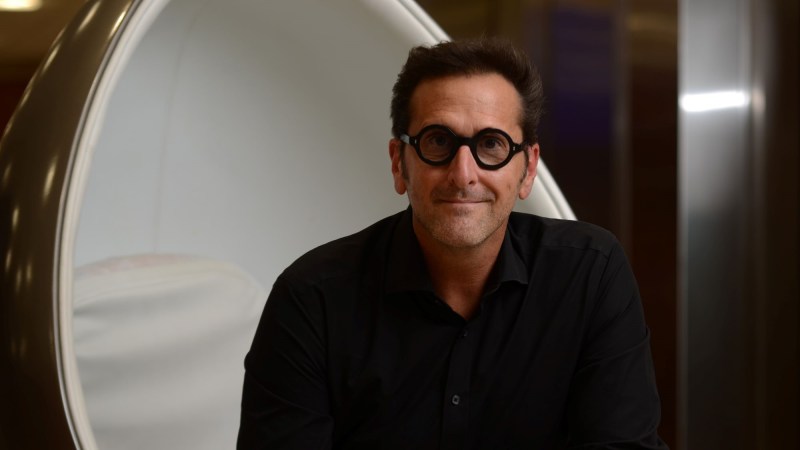
Gary Brotman, CEO, Secondmind
Opinions expressed by Entrepreneur contributors are their own.
You're reading Entrepreneur United Kingdom, an international franchise of Entrepreneur Media.
AI is often framed as automation. Secondmind sees it as augmentation. After years building AI products, the company pivoted into automotive engineering—where complexity has outpaced traditional tools. By applying Active Learning to calibration and system design, Secondmind helps engineers explore more possibilities with less data, cutting development time while keeping humans firmly in control. The goal isn’t autonomy. It’s better decisions under pressure. We talk to Gary Brotman, CEO of Cambridge-based Secondmind, an Engineering AI software company that exists to help engineers design better products faster.
What inspired you to tackle a specific problem for engineers?
Most people think AI is about automation. I think that’s backwards. The most valuable AI systems don’t replace human judgment. They show us where our judgment actually matters and help us make better decisions. That belief, which was formed by more than a decade of productizing AI and machine learning technology, is what pulled me into the world of engineering.
I’ve spent my career focused on one recurring theme: helping people navigate complexity through storytelling. I started as a writer and communicator, then moved into technical product management and strategy, always working at the boundary where highly technical systems meet human decision-making. Over time, I became increasingly drawn to engineers – the people responsible for building the physical systems society depends on every day.
Today, engineers in industries like automotive, energy, and semiconductors are facing an unprecedented level of complexity. Modern vehicles, for example, sit among the most complex products humans have ever created. They combine millions of lines of software code, tightly coupled hardware systems, evolving regulatory constraints, aggressive sustainability targets, and rising consumer expectations – all colliding at once. The rate of complexity growth has far outpaced the productivity of traditional engineering tools.
Automotive became our beachhead market because it captures this challenge in its most concentrated form. Engineers are expected to design, calibrate, and validate systems across internal combustion, hybrid, and fully electric platforms – often in parallel – while shrinking development timelines and budgets. Yet many of the simulation and calibration tools they rely on struggle because they were never designed for this scale of engineering complexity.
We saw an opportunity to do something different: to apply practical, data-efficient AI in a way that augmented engineers rather than replacing them. The goal was not to automate engineering judgment, but to give engineers software they could easily use, deeply trust, and confidently incorporate into their existing workflows. Software that respected their expertise while helping them explore more design and performance possibilities, faster, and with fewer physical prototypes.
At its core, this was about enabling better decisions under extreme constraints. Engineers don’t need more data; they need better insight. That belief is the foundation for everything we build.
What unexpected challenges did you face while addressing this problem?
When you’re building something genuinely new, unexpected challenges are inevitable, and often really valuable. Challenging assumptions is part of the discovery process, and in our case it fundamentally reshaped the company.
Before I became CEO, I rebranded the company as Secondmind. At the time, the company was applying machine learning to demand planning problems for non-technical people in supply chain management. I believed strongly in AI as a collaborator – a “second mind” that works alongside people to improve their decision making and increase their personal value. Within a year, however, it became clear that our core technology was far better suited to complex engineering problems than to business forecasting.
We pivoted into automotive with a strong lead customer, Mazda, and began applying our Active Learning system directly to engineering problems. Initially, we assumed the primary interaction would be machine-to-machine: AI systems talking to simulation tools, test benches, and prototype hardware, to optimise design and performance automatically. What we learned was that the human engineer remained the lynchpin – the critical decision-maker – at every stage.
In fact, the challenge facing engineers turned out to be even greater than what we had observed in supply chain. They weren’t just optimising existing systems, they were inventing new ones under intense time, cost, and sustainability pressures, while managing a persistent gap between virtual simulation and real-world behaviour.
A concrete example came from the calibration of an electric motor and inverter for an EV. Traditionally, engineers must run thousands of tests to understand how performance changes under different conditions, waiting hours between runs for systems to cool and stabilise. Using the Secondmind Active Learning system, engineers were able to identify optimal calibration settings using only 20% of the data normally required, which cut calibration time nearly in half without sacrificing accuracy. Active Learning handled the mathematical complexity and helped the engineer retain control with better trade-offs and more confidence in the final decision.
What initially looked like a challenge – working in a domain where machines interact with machines – re-enforced the larger opportunity. Our technology could act as a cognitive bridge: translating an engineer’s intent into intelligent, automated experimentation, and turning physical feedback into actionable insight. The result was not just faster automation, but better engineering outcomes.
How did those challenges shape the way you approached your solution?
Those lessons fundamentally shaped both our product and how I approached building the business. From a product perspective, we became obsessive about trust, transparency, and workflow fit. Engineers will not adopt tools they don’t understand, can’t interrogate or easily integrate without disruption. That meant building an AI system that can explain why certain experiments matter; allow engineers to intervene when needed, and incorporate domain knowledge alongside data.
From a business perspective, we don’t position AI as something that just “solves” engineering problems. Instead, we promote it as a force multiplier for human expertise. That mindset influences everything from how we onboard customers to how we measure success over time: not by how autonomous the software is, but by how much better, faster, and more confidently engineers can make decisions. The company is built around a few simple principles, chief among them being that AI should reduce cognitive load, not add to it.
What’s the most important lesson you’ve learned along the way?
Relentless focus matters more than almost anything else. Companies with powerful platform technologies often fall into the trap of trying to solve too many problems at once. Before I became CEO, the company had spent a significant amount of venture capital pursuing multiple markets in parallel, driven by a broad vision but without being grounded in proven product principles. Vision is essential because it gives people a reason to run forward, but execution requires strong discipline. When we pivoted into automotive, we deliberately restarted with a single, well-defined problem: control system calibration. We focused on delighting one type of customer and solving one painful problem exceptionally well.
That focus paid off. From that initial foothold, we have expanded across multiple stages of the vehicle design and development lifecycle. Today, companies in new markets where discrete engineering complexity is on the rise are approaching us because our underlying value has been proven. The lesson is simple but hard-earned: build one thing that delivers value and people love first. A product or platform visions is easier once you do.
AI is often framed as automation. Secondmind sees it as augmentation. After years building AI products, the company pivoted into automotive engineering—where complexity has outpaced traditional tools. By applying Active Learning to calibration and system design, Secondmind helps engineers explore more possibilities with less data, cutting development time while keeping humans firmly in control. The goal isn’t autonomy. It’s better decisions under pressure. We talk to Gary Brotman, CEO of Cambridge-based Secondmind, an Engineering AI software company that exists to help engineers design better products faster.
What inspired you to tackle a specific problem for engineers?
Most people think AI is about automation. I think that’s backwards. The most valuable AI systems don’t replace human judgment. They show us where our judgment actually matters and help us make better decisions. That belief, which was formed by more than a decade of productizing AI and machine learning technology, is what pulled me into the world of engineering.
I’ve spent my career focused on one recurring theme: helping people navigate complexity through storytelling. I started as a writer and communicator, then moved into technical product management and strategy, always working at the boundary where highly technical systems meet human decision-making. Over time, I became increasingly drawn to engineers – the people responsible for building the physical systems society depends on every day.

Patricia Cullen • Features Writer
Entrepreneur Staff