Why Domestic Marketing Fails Internationally
Most founders misjudge timelines, costs, and signals in expansion
Accuracast
Opinions expressed by Entrepreneur contributors are their own.
You're reading Entrepreneur United Kingdom, an international franchise of Entrepreneur Media.
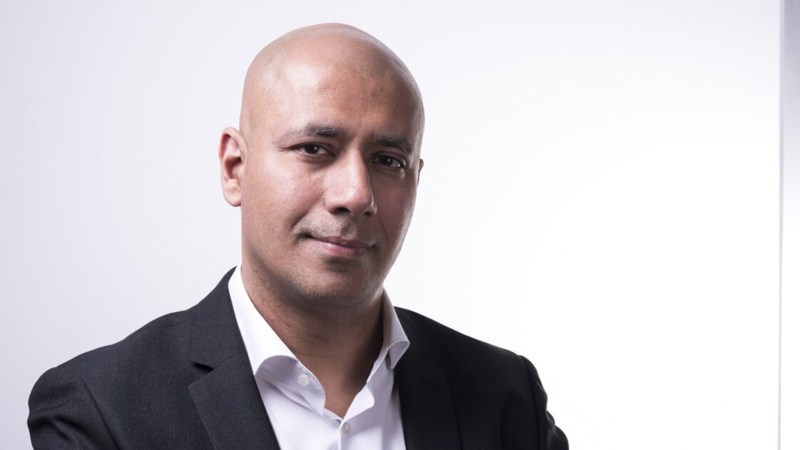
International expansion rarely fails because founders lack ambition. It fails because the timeline is wrong, the cost of building trust is underestimated, and early signals get misread. Farhad Divecha is Group CEO of Accuracast, the London-based digital marketing firm he has helped scale into an international agency. His background spans launching online companies and managing an $80m+ product line fresh out of university, with a leadership style shaped by execution rather than theory.
In this interview with Entrepreneur UK, Divecha breaks down the mistakes that only become obvious once real money is on the line. He explains why brand awareness takes longer than founders plan for, when instinct becomes expensive, and why repeat custom matters more than headline growth metrics. He also shares the leadership shift that unlocks scale, plus a practical way to validate demand before entering a new market, whether you are a product business or a digital marketing agency expanding services internationally.
You’ve scaled Accuracast and numerous client brands across markets and sectors. What is the most common mistake founders make when expanding internationally, and why does it usually appear only once real money is on the line?
Underestimating how long it takes to build brand awareness, and how much effort it takes to turn that into sales. In the research phase, a lot of founders try to make the story fit the budget they already have. They rationalise away obvious friction. New market, new competitors, new customer expectations, new trust gap. It all gets squeezed into a best-case plan. Then, real spending starts. Results are slower than expected, pressure builds, and decisions become reactive. If you plan for worst-case scenarios up-front, you don’t get forced into a corner and make bad decisions later. You keep control when the first version of the plan doesn’t work out.
Many founders still rely on instinct when making growth decisions. At what point does instinct become a liability, and which data signals should leaders prioritise instead?
Instinct is great! In many cases it’s what got founders to where they are, so I would never dismiss it. But instinct becomes a liability when it turns into a reason to keep funding losses. You can’t justify underperformance forever by saying you “feel” it will turn. If I’m choosing what to prioritise, I want signals that tell me whether demand is real and whether growth is efficient. Funnel conversion, lead-to-opportunity movement, and CAC payback – these numbers don’t care about optimism. Personally, I look at retention and repeat custom, because that’s what indicates the difference between a campaign that spikes and a business that compounds.
From your experience, which metrics do founders overvalue during scale-up, and which indicators actually predict sustainable international growth?
Traffic and social media engagement are often overvalued. They can look great on a dashboard and still mean nothing commercially. Repeat custom is the single most valuable predictor of sustainable growth. If customers come back, you’re not just winning attention, you’re delivering something that provides value. Revenue growth, profitability, and time to profitability are also strong indicators of market entry success. They foretell longevity and potential in the market. Brand awareness is often undervalued too. It’s harder to measure cleanly, but it changes the economics of growth. When awareness is strong, conversion gets easier and the efficiency of paid spend improves.
Global expansion often forces founders to change how they lead. What did you personally have to unlearn as AccuraCast grew, and what leadership shift made the biggest difference?
I had to unlearn the idea that I needed to know and understand everything. That mindset feels responsible in the early stages. Later, it just slows the business down. If every important decision needs you, you’ve built dependency, not leadership. The shift that made the biggest difference was recruiting the right talent and giving them real ownership. The other side of that is being willing to let go of the wrong people quickly. Holding on for too long costs you speed, standards, and focus. Founders often assume that what works in one market can simply be replicated elsewhere. Why does this thinking fail, and how should leaders approach localisation without losing scalability?
The easy answer is cultural nuance. But the deeper issue is this: founders and leadership teams often don’t fully understand what really makes customers buy from them.
So, they replicate the wrong things. They scale the headline USPs, the messaging, the surface behaviours. Then they’re surprised when it doesn’t land in a new market. Localisation starts with a more in-depth understanding of why customers buy. And that requires being on the frontlines or talking directly to the people who are on the frontlines. Once you’re clear on the real buying triggers, localisation becomes practical. You adapt the message and experience, but you don’t lose the core values that make your business successful in your home market.
For founders considering international expansion in the next 12 months, what is the single decision they should spend more time getting right before they move?
Identifying demand. Test organic demand on a niche subset of the audience where you believe you have perfect product-market fit. If you can’t get traction there, paid expansion won’t fix it. It just makes the mistake more expensive. When you can see organic demand, you have something solid. Then scaling becomes a strategic decision, not a gamble.
International expansion rarely fails because founders lack ambition. It fails because the timeline is wrong, the cost of building trust is underestimated, and early signals get misread. Farhad Divecha is Group CEO of Accuracast, the London-based digital marketing firm he has helped scale into an international agency. His background spans launching online companies and managing an $80m+ product line fresh out of university, with a leadership style shaped by execution rather than theory.
In this interview with Entrepreneur UK, Divecha breaks down the mistakes that only become obvious once real money is on the line. He explains why brand awareness takes longer than founders plan for, when instinct becomes expensive, and why repeat custom matters more than headline growth metrics. He also shares the leadership shift that unlocks scale, plus a practical way to validate demand before entering a new market, whether you are a product business or a digital marketing agency expanding services internationally.
You’ve scaled Accuracast and numerous client brands across markets and sectors. What is the most common mistake founders make when expanding internationally, and why does it usually appear only once real money is on the line?
Underestimating how long it takes to build brand awareness, and how much effort it takes to turn that into sales. In the research phase, a lot of founders try to make the story fit the budget they already have. They rationalise away obvious friction. New market, new competitors, new customer expectations, new trust gap. It all gets squeezed into a best-case plan. Then, real spending starts. Results are slower than expected, pressure builds, and decisions become reactive. If you plan for worst-case scenarios up-front, you don’t get forced into a corner and make bad decisions later. You keep control when the first version of the plan doesn’t work out.

Patricia Cullen • Features Writer
Entrepreneur Staff