Why Personal Cyber Awareness Can No Longer Be Optional and How Everyday Habits Shape Safety in an AI-Driven World
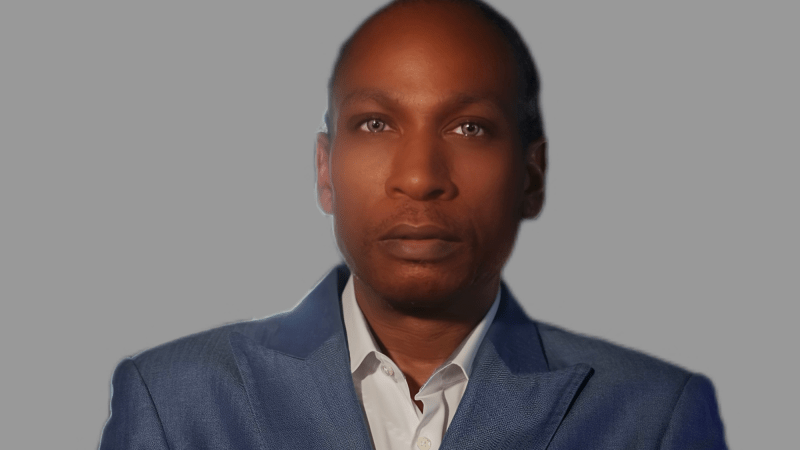
Cordell Robinson, CEO of Brownstone Consulting Firm
Businesses have spent years refining systems to safeguard their data, investing in protocols that reduce exposure and maintain trust. That level of discipline has become second nature in some corporate environments: password rotations, access controls, encrypted communication, employee training, and continuous monitoring. These layers of protection exist because the consequences of getting it wrong can be damaging. Yet, despite many people understanding these processes at work, the same habits rarely make their way into personal routines. “Cybersecurity awareness is not just something you should be aware of at work,” Cordell Robinson, CEO of Brownstone Consulting Firm, notes, “but also in your personal life as well, with your personal data.”
The gap between how individuals behave professionally and how they operate in their private lives has created an environment where personal risk is intensifying. Identity theft alone affected more than a million individuals in the United States last year, according to the Federal Trade Commission, with losses exceeding $10 billion across categories such as credit card fraud, new account scams, and impersonation schemes. These incidents represent only what was reported. “Many people never discover that their information has been compromised,” Robinson explains, “while others dismiss unusual activity as a minor inconvenience rather than a vulnerability with long-term consequences.”
This growing trend is fueled by how daily life has shifted online. Individuals share sensitive data across devices, accounts, apps, and platforms without consistent oversight. In many cases, they use passwords that have not been changed for years. Some use the same credentials across multiple accounts. Others store important documents in unprotected email folders or keep digital copies of bills and statements accessible without encryption. Robinson explains that simply developing a routine can reshape a person’s entire security posture. “If we start doing it as a practice, then it becomes second nature,” he says.
For Robinson, part of this shift begins with helping people think the way professionals do. His work at Brownstone Consulting Firm often revolves around raising awareness, guiding organizations through safer behaviors, and encouraging individuals to carry those same habits into their personal routines. While the firm’s role is not to police anyone’s private life, it regularly emphasizes the mindset that allows people to become more intentional about the data they handle every day.
According to Robinson, a major contributor to personal exposure today is how widely people now use artificial intelligence tools. Many treat AI systems as if they were private assistants, sometimes even confiding in them as if they were therapists. These behaviors may seem harmless, but they often involve entering extremely personal information into platforms that may not operate with the confidentiality people assume. “You should not be telling a machine your deepest, darkest secrets as you would your therapist,” Robinson says. “There is no doctor-patient confidentiality agreement when it comes to AI.”
The misconception, Robinson explains, that AI operates with built-in guardrails creates a false sense of safety. Some tools are open systems that learn from user behavior. Others store data in ways that users do not fully understand. As AI becomes more mainstream, individuals can unknowingly reveal details such as their financial habits, location patterns, relationship information, or identification numbers. This becomes even more concerning when combined with the fact that scammers have increasingly begun using AI themselves, creating realistic messages, voice clones, and even video simulations to deceive people across text, email, and social media.
These forms of manipulation are already resulting in significant personal losses. A study found that text-based scams cost U.S. consumers around $330 million in a single year. According to Robinson, many of these incidents succeed not because individuals lack knowledge, but because they lack established habits that make them pause and verify before responding. Robinson warns that simple vigilance can prevent complexity later. He often emphasizes the power of small steps, such as reviewing AI outputs before using them, avoiding unnecessary personal disclosures, securing digital folders with passwords, and deleting sensitive emails once the information is saved safely.
The urgency is growing even within professional environments. At a recent CEO conference, Robinson was struck by how few leaders had implemented AI guardrails in their own companies. “They are just installing it and using it without thinking about asking the questions,” he says. “If seasoned executives are struggling to manage these shifts, individuals at home face even greater uncertainty.”
Ultimately, Robinson believes that awareness and preparation reshape how people interact with one another. “If we are a more prepared society, we will be more prepared in so many other facets of our lives,” he explains. “When you are always on the defensive, you are always on edge. But when you are on the offensive, that means you are prepared.” Through Brownstone Consulting Firm, he aims to spark that shift in mindset, helping people recognize that security is not about fear, but about building habits that allow them to live with greater confidence in a digital world that continues to evolve.
Businesses have spent years refining systems to safeguard their data, investing in protocols that reduce exposure and maintain trust. That level of discipline has become second nature in some corporate environments: password rotations, access controls, encrypted communication, employee training, and continuous monitoring. These layers of protection exist because the consequences of getting it wrong can be damaging. Yet, despite many people understanding these processes at work, the same habits rarely make their way into personal routines. “Cybersecurity awareness is not just something you should be aware of at work,” Cordell Robinson, CEO of Brownstone Consulting Firm, notes, “but also in your personal life as well, with your personal data.”
The gap between how individuals behave professionally and how they operate in their private lives has created an environment where personal risk is intensifying. Identity theft alone affected more than a million individuals in the United States last year, according to the Federal Trade Commission, with losses exceeding $10 billion across categories such as credit card fraud, new account scams, and impersonation schemes. These incidents represent only what was reported. “Many people never discover that their information has been compromised,” Robinson explains, “while others dismiss unusual activity as a minor inconvenience rather than a vulnerability with long-term consequences.”
This growing trend is fueled by how daily life has shifted online. Individuals share sensitive data across devices, accounts, apps, and platforms without consistent oversight. In many cases, they use passwords that have not been changed for years. Some use the same credentials across multiple accounts. Others store important documents in unprotected email folders or keep digital copies of bills and statements accessible without encryption. Robinson explains that simply developing a routine can reshape a person’s entire security posture. “If we start doing it as a practice, then it becomes second nature,” he says.