Byte into Food Waste Tech
From AI to apps, Somdip Dey is cooking up smarter ways to fight food waste across the UK
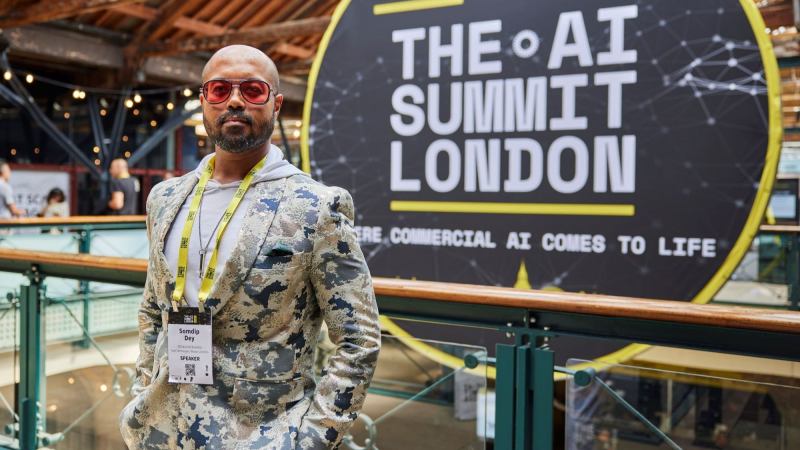
Nosh Technologies
Somdip Dey, co-founder, Nosh Technologies
Opinions expressed by Entrepreneur contributors are their own.
You're reading Entrepreneur United Kingdom, an international franchise of Entrepreneur Media.
Food waste is often dismissed as an unfortunate byproduct of modern life – but for Somdip Dey, it’s a problem demanding urgent attention. Drawing on his academic expertise and personal experience, Dey has developed Nosh Technologies, an AI-driven startup that aims to help households, retailers, and councils reduce waste and rethink how we manage food. It’s a quietly ambitious attempt to tackle one of the UK’s most persistent environmental challenges through innovation and practicality.
Why did you choose to build Nosh Technologies from Colchester – not London – and how has that shaped your journey?
While London is often seen as the epicentre for start-ups, its saturated ecosystem makes it hard for emerging founders to stand out. Colchester, on the other hand, offered us the space, support, and spotlight to thrive. I was pursuing my PhD in Embedded AI at the University of Essex when the idea for the nosh app was born, so staying local gave us access to academic talent, research infrastructure, and regional funding like the BBSRC Impact Acceleration Account (IAA) award. Building in Colchester not only rooted our innovation in an underrepresented region but also allowed us to represent Essex on global stages like TechCrunch Disrupt, showcasing that deep tech innovation doesn’t have to come from a capital postcode.
What inspired you to tackle food waste with AI?
In 2014, while I was studying at the University of Manchester, a family emergency left me financially drained. I had to survive an entire week on food salvaged from bins—an experience that opened my eyes to the paradox of food waste and hunger. That same year, I co-created the world’s first crowd food-sharing app to help people redistribute leftovers and surplus to others in need. Later, during the COVID-19 lockdowns in 2020, food waste within households spiked again due to irregular shopping patterns and perishables going bad. Combining that experience with my PhD research in Embedded AI, I developed the nosh app with Suman Saha to help households and businesses use AI to manage inventory, cut waste, and live more sustainably.
From households to councils and shops, how are you scaling Nosh’s impact across the UK?
We started with households, offering AI-powered inventory tracking, recipe suggestions, and carbon footprint insights. We then expanded to shops with our nosh Shop platform—helping food retailers and producers sell about-to-expire inventory and generate WRAP reports for regulatory compliance. This was supported by the BBSRC IAA fund. More recently, we partnered with local councils to pilot in-app waste collection features that link households directly to council services. Winning the Innovate UK Unlocking Potential Award allowed us to expand further by launching nosh Aura, which brings Generative AI-powered fitness and meal planning to users—all through a single app. Our approach is system-wide, scalable, and designed to adapt locally.
What’s the biggest challenge in building sustainable tech that people actually use daily?
Two key challenges come to mind. First, satisfied users rarely leave feedback, but unhappy ones almost always do—making it hard to measure silent success. Yet we deliberately avoid pestering users for reviews to preserve a frictionless experience. Second, innovating in AI while maintaining a seamless user interface is a constant balancing act. As both an academic and founder, I face the tension between building open-source AI for fairness and keeping parts of our tech closed for monetisation. Navigating that duality while staying user-focused is an ongoing challenge. We use both human and AI-driven feedback loops to continuously refine our product and user experience. Additionally, this year at the 2025 AI Summit London my talk focused on the debate between open-source and closed AI models such that AI developers and companies could better understand which model to focus on for their needs.
What’s the one lesson every founder should learn early—but usually doesn’t?
It’s managing finances. Too many early-stage founders burn through capital too quickly without sustainable planning. I’ve seen this firsthand through peers in the Forbes 30 Under 30 and MIT Innovators Under 35 networks that I am part of. From my own experience—some hard-earned—I learned the value of lean operations. That inspired me to write “The Frugal Founder: Thriving in Entrepreneurship with Lean Principles“, a practical guide on how to stretch startup capital wisely without sacrificing innovation. Every founder should learn to build with discipline, not just ambition. Financial prudence doesn’t stifle growth—it sustains it.
Food waste is often dismissed as an unfortunate byproduct of modern life – but for Somdip Dey, it’s a problem demanding urgent attention. Drawing on his academic expertise and personal experience, Dey has developed Nosh Technologies, an AI-driven startup that aims to help households, retailers, and councils reduce waste and rethink how we manage food. It’s a quietly ambitious attempt to tackle one of the UK’s most persistent environmental challenges through innovation and practicality.
Why did you choose to build Nosh Technologies from Colchester – not London – and how has that shaped your journey?
While London is often seen as the epicentre for start-ups, its saturated ecosystem makes it hard for emerging founders to stand out. Colchester, on the other hand, offered us the space, support, and spotlight to thrive. I was pursuing my PhD in Embedded AI at the University of Essex when the idea for the nosh app was born, so staying local gave us access to academic talent, research infrastructure, and regional funding like the BBSRC Impact Acceleration Account (IAA) award. Building in Colchester not only rooted our innovation in an underrepresented region but also allowed us to represent Essex on global stages like TechCrunch Disrupt, showcasing that deep tech innovation doesn’t have to come from a capital postcode.
What inspired you to tackle food waste with AI?
In 2014, while I was studying at the University of Manchester, a family emergency left me financially drained. I had to survive an entire week on food salvaged from bins—an experience that opened my eyes to the paradox of food waste and hunger. That same year, I co-created the world’s first crowd food-sharing app to help people redistribute leftovers and surplus to others in need. Later, during the COVID-19 lockdowns in 2020, food waste within households spiked again due to irregular shopping patterns and perishables going bad. Combining that experience with my PhD research in Embedded AI, I developed the nosh app with Suman Saha to help households and businesses use AI to manage inventory, cut waste, and live more sustainably.

Patricia Cullen • Features Writer
Entrepreneur Staff