The Secret to Building Two Game-Changing Businesses
From pioneering fitness data APIs to redefining flexible living, Raouf Yousfi has turned challenges into stepping stones. Discover his journey from failed startups to Forbes 30 Under 30—and the lessons every entrepreneur can learn.
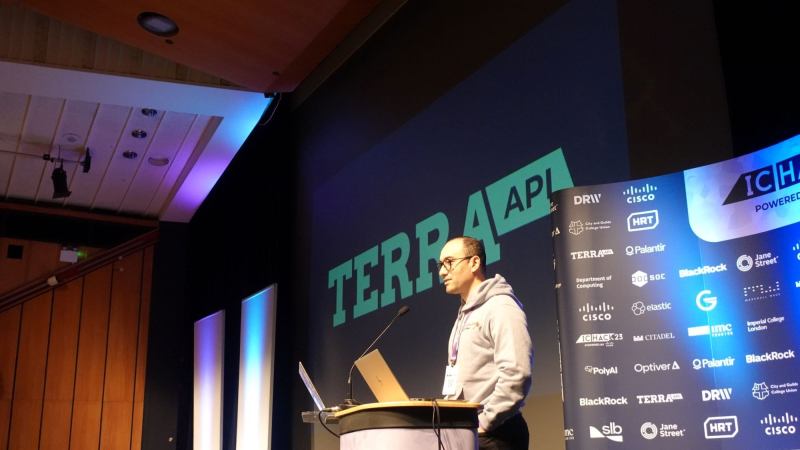
Terra API
Opinions expressed by Entrepreneur contributors are their own.
You're reading Entrepreneur United Kingdom, an international franchise of Entrepreneur Media.
Raouf Yousfi, co-founder of London-based Terra API, which transforms how developers access fitness and health data, and founder of The Flex, (formerly Flex Living) a platform for flexible property rentals, discusses how vision, persistence, and strategic risk-taking turned his entrepreneurial dreams into reality.
Yousfi and co-founder Kyriakos Eleftheriou, both Imperial College Business School alumni, launched Terra API to become Forbes 30 Under 30 honorees in Technology, graduate from Y Combinator, and raise $2.8m in funding. In this Entrepreneur UK interview, Yousfi shares insights on failure, co-founder selection, and the importance of starting now.
What inspired you to start your business?
I’ve been asked this question countless times by friends and family: “Why do you do what you do?” For years, I struggled to give an answer that truly satisfied me. It wasn’t until recently that I found the clarity I was looking for. From a very young age, I’ve been captivated by the legacies of humanity’s greatest achievers. Their stories have inspired me to dream big, to aim for a life that leaves a mark on history. I would often compare myself to them and wonder how I, too, could ensure that my name endures through time.
But the more I reflected, the more I realized something profound: to achieve greatness, one must align with the spirit of their era. History remembers those who epitomize the essence of their time. Being a philosopher like Aristotle or Plato during the Greek Empire, or a conqueror like Julius Caesar in the Roman Empire, was a pathway to immortality back then. But today? A philosopher or a war general might fade into obscurity. We live in a different world now—a world defined by innovation, technology, and entrepreneurship. Future generations will likely remember this era not for its warriors or scholars but for its visionaries—entrepreneurs like Steve Jobs and Bill Gates, who reshaped the way we live, think, and connect.
This realisation shaped my ambition and fuelled my purpose. However, the journey to this understanding hasn’t been easy. I’ve launched multiple businesses that failed before building Terra API and The Flex. Each failure taught me invaluable lessons, shaping the entrepreneur I am today. In many ways, I feel the journey is only just beginning.
What was your biggest challenge and how did you overcome it?
Since the very first day we started working on Terra API, the journey has been anything but smooth. We faced countless challenges, one major challenge we faced early on was finding top-tier engineers to help us build our product. This wasn’t just about filling roles—we needed the best of the best. After all, we were building a product designed for engineers to use, so only exceptional engineers could build something exceptional.
We interviewed hundreds of candidates, including experienced professionals from companies like Google and Facebook. Yet, surprisingly, we discovered that the most brilliant and motivated engineers were often young graduates—those who were hungry, driven, and passionate about creating innovative projects just for fun. This realisation led us to change our strategy. We began organsing hackathons at Imperial College Business School, where we had studied a Masters in Management in 2017. These events became a space to identify extraordinary talent. As our strategy evolved, we expanded to universities like Harvard, Stanford, and MIT. Hackathons became our secret weapon for discovering outstanding talent early in their careers.
Building Terra API hasn’t just been about overcoming obstacles—it’s been about embracing challenges and turning them into opportunities. Every setback has shaped us, and every success has been a testament to persistence, innovation, and the power of believing in something before it’s fully realised.
How did you secure your initial funding?
Rejection after rejection. That’s what we faced when we approached European venture capitalists, desperately trying to secure funding to keep Terra API alive in its earliest days. It felt like an uphill battle with no end in sight, but we knew giving up wasn’t an option.
Our breakthrough came when we joined one of the world’s most prestigious startup accelerators—Y Combinator. That experience was transformative. I vividly remember the moment we pitched our scrappy, unfinished product to Jared Friedman and Tim Brady during a 15-minute interview. By most measures, our product was far from impressive—it was incomplete, rough around the edges, and far from polished. Yet, they saw something in us that no one else did. Their belief in our vision became the spark that reignited our drive and gave us the momentum we so desperately needed.
After Y Combinator’s Demo Day, everything changed. With the spotlight on us, we raised funding from some of the most prominent investors in the world. Among them were General Catalyst, Samsung Next Ventures, and Next Ventures. We also received backing from inspiring angel investors, including Tom Blomfield (founder of Monzo), Ilkay Gündogan (Manchester City footballer), and even the legendary cyclist Lance Armstrong. The journey from countless rejections to such an extraordinary lineup of supporters taught us one thing: persistence and passion are what truly set apart those who make it from those who don’t.
How do you handle failure or setbacks?
Failure has been a constant companion in my entrepreneurial journey. I’ve attempted to build multiple businesses in the past, and many of them failed. It’s been a tough road, but these failures have taught me invaluable lessons and shaped who I am today. Over time, I’ve come to realise that overcoming failure requires mastering three essential elements: psychological acceptance, reflection, and structured learning.
The first element is psychological resilience. Failure is inevitable—it’s a part of the journey, not the end of it. Once you understand that failure is a feedback loop, it becomes easier to embrace it. For me, mistakes are essential; they are the only way I learn and grow. When you start to see failure as an opportunity to improve rather than a setback, it becomes less demoralising. Instead, it becomes an integral part of progress.
The second element is reflection. Accepting failure isn’t enough on its own. You have to actively learn from it. This means asking yourself tough questions: What went wrong? Why did it go wrong? What could I have done differently? Reflection allows you to build awareness and develop strategies to avoid repeating the same mistakes. It’s not just about moving on—it’s about moving forward with more clarity and intention.
The final, often overlooked element is structured learning. Reflection without action is incomplete. To truly accelerate your growth, you need to document and organise your learnings. Human memory is fleeting, and relying on it alone isn’t enough. I’ve made it a habit to document everything I go through—the decisions, the mistakes, and the lessons learned. This system allows me to revisit and apply my experiences whenever I face similar challenges in the future. The faster and more effectively you can learn, the faster you can build something meaningful.
Failure isn’t the end of the road—it’s a stepping stone. By embracing it, reflecting on it, and documenting the lessons it brings, you can turn even the toughest setbacks into opportunities for growth. For me, failure has been my greatest teacher, and learning how to learn from it has been my most valuable skill.
What advice would you give to someone starting their own business?
1. Success Isn’t About Being Smart
– As Steve Jobs said, building something great is so hard that most would give up.
– The best founders are relentlessly resourceful and driven, focusing on persistence over intelligence.
2. Find the Right Co-Founders
- The journey is too hard to do alone; you need both business and emotional support. Prioritise:
- Shared principles and values for tough decisions.
- Chemistry for long working hours together.
- Complementary skills for speed (less critical than the first two).
3. Act Quickly
- Launch a minimum viable product (MVP) that customers are willing to pay for.
- Execution drives learning and growth—experience is built along the way.
4. Do Things That Don’t Scale
- In early stages, focus intensely on crafting customer experiences individually.
- Examples:
- Airbnb: Brain Chesky was personally photographing listings.
- Stripe: Collision brothers clients to install payment systems manually.
- Terra API: We were given permission to write code on our clients’ servers to fix bugs and successfully integrate them to our API.
- The Flex: I was personally moving furniture and meeting guests.
5. Hire Based on Need, Not Fundraising
- Do everything yourself with your co-founder in the early days.
- Only hire when processes are repeatable and the need is clear
How do you stay motivated during tough times?
I believe that each person has a unique source of motivation—a deeply personal reason that drives them forward. For me, staying connected to my “why” is everything. It’s a constant reminder of the purpose behind my efforts, the fuel that keeps me moving even when the road gets tough. Remembering why I started and what I’m working toward isn’t just a motivation—it’s the foundation of my resilience and determination.
Share your tips for achieving success…
Success means different things to different people. It’s subjective. But when it comes to business success, here are my top five tips:
- Work on Something You’re Passionate About
The entrepreneurial journey is incredibly tough. If you’re not genuinely passionate about what you’re building, the challenges will feel insurmountable, and giving up will become the natural path. Passion gives you the resilience to push through even the hardest moments and keeps you grounded in your purpose. - Start Now and Embrace Failure
Don’t wait for the “perfect time” to begin—start today, even if it feels imperfect. Failure is inevitable, but it’s also the greatest teacher. Every mistake is an opportunity to learn, adapt, and grow stronger. The sooner you start, the sooner you can iterate and improve. - Surround Yourself with the Best People
Everything I’ve learned has come from the people around me. Seek out mentors, collaborators, and leaders who inspire you and who have already walked the path you’re on. Learn from their successes and mistakes—it will save you years of trial and error. Success is rarely a solo endeavour; the right people can propel you forward. - Be Relentlessly Resourceful
Business success demands creativity, adaptability, and the ability to solve problems with whatever resources are available to you. Challenges will arise that seem insurmountable, but the key is to approach them with determination and ingenuity. Never give up, and always look for alternative paths to achieve your goals.
Raouf Yousfi, co-founder of London-based Terra API, which transforms how developers access fitness and health data, and founder of The Flex, (formerly Flex Living) a platform for flexible property rentals, discusses how vision, persistence, and strategic risk-taking turned his entrepreneurial dreams into reality.
Yousfi and co-founder Kyriakos Eleftheriou, both Imperial College Business School alumni, launched Terra API to become Forbes 30 Under 30 honorees in Technology, graduate from Y Combinator, and raise $2.8m in funding. In this Entrepreneur UK interview, Yousfi shares insights on failure, co-founder selection, and the importance of starting now.
What inspired you to start your business?
I’ve been asked this question countless times by friends and family: “Why do you do what you do?” For years, I struggled to give an answer that truly satisfied me. It wasn’t until recently that I found the clarity I was looking for. From a very young age, I’ve been captivated by the legacies of humanity’s greatest achievers. Their stories have inspired me to dream big, to aim for a life that leaves a mark on history. I would often compare myself to them and wonder how I, too, could ensure that my name endures through time.

Patricia Cullen • Features Writer
Entrepreneur Staff