Is Green Tech Possible?
In the fast-evolving world of AI hardware, sustainability often takes a backseat to speed and scale.
Opinions expressed by Entrepreneur contributors are their own.
You're reading Entrepreneur United Kingdom, an international franchise of Entrepreneur Media.
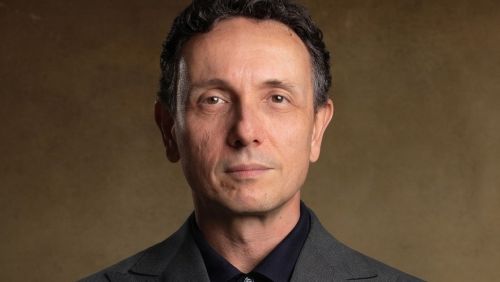
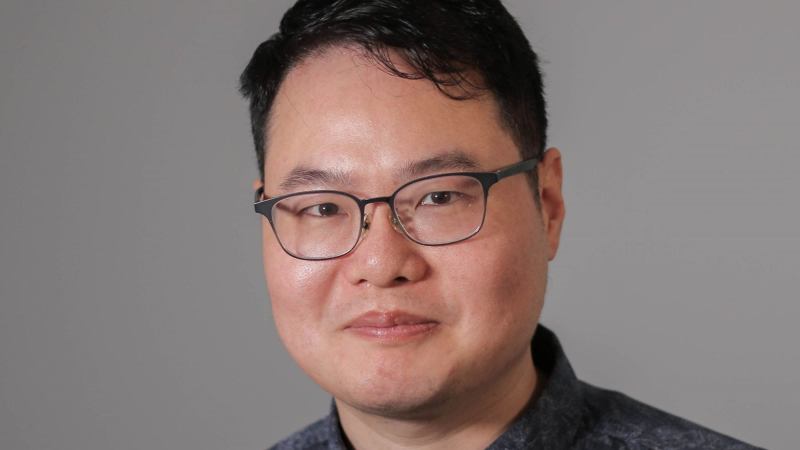
But for Dr. Liucheng Guo, co-founder and CTO of TG0, an ambitious London and Hong Kong-based start up, green innovation isn’t just an add-on – it’s baked into the very blueprint of the business. From simplifying product design to cutting energy use, Dr. Guo shares with Entrepreneur UK how TG0 is redefining what it means to build tech that’s both cutting-edge and conscious, navigating the delicate balance between environmental responsibility and startup realities.
How are you incorporating sustainability into your business model?
At TG0, we embed sustainability into both our product design and manufacturing processes. Our technology simplifies user interfaces by reducing the need for mechanical parts; fewer components mean less material waste, lower e-waste, and easier end-of-life recycling. In manufacturing, we prioritise the use of recyclable materials where possible and aim to avoid overengineering. On the software side, we focus on low-resource AI that requires minimal power consumption. For us, sustainability isn’t about chasing perfection; it’s about making steady, practical improvements at every step.
How do you balance environmental goals with the financial pressures of running a startup?
It’s definitely a balancing act. As a startup, you have to be very deliberate about where you invest time and resources. We focus on areas where sustainability and financial efficiency overlap, like designing simpler, modular products that are cheaper to produce and easier to maintain. Not every sustainable idea makes sense for us at a given stage, but we try to prioritise the ones that have a clear commercial and operational advantage too. It’s a constant evaluation, not a one-off decision.
Are investors expecting more from startups in terms of environmental, social, and governance (ESG) practices?
Yes — expectations have changed quite a bit, especially in the last few years. ESG is increasingly part of how investors assess long-term risk and potential, not just a checklist item. For deeptech startups like ours, that can actually be an advantage, because if you’re building something with future impact in mind, ESG naturally fits into that conversation. Investors are asking smarter questions, and they expect startups to have considered not just their immediate product-market fit, but their broader responsibility too.
So, as ESG expectations become a non-negotiable for investors and consumers alike, TG0’s approach offers a blueprint for startups striving to align purpose with profit. Dr. Guo’s pragmatic yet forward-thinking mindset highlights that sustainability isn’t about perfection – it’s a continuous journey of innovation, efficiency, and accountability. In the race to scale, companies like TG0 prove that building a better future starts with building smarter today.
But for Dr. Liucheng Guo, co-founder and CTO of TG0, an ambitious London and Hong Kong-based start up, green innovation isn’t just an add-on – it’s baked into the very blueprint of the business. From simplifying product design to cutting energy use, Dr. Guo shares with Entrepreneur UK how TG0 is redefining what it means to build tech that’s both cutting-edge and conscious, navigating the delicate balance between environmental responsibility and startup realities.
How are you incorporating sustainability into your business model?
At TG0, we embed sustainability into both our product design and manufacturing processes. Our technology simplifies user interfaces by reducing the need for mechanical parts; fewer components mean less material waste, lower e-waste, and easier end-of-life recycling. In manufacturing, we prioritise the use of recyclable materials where possible and aim to avoid overengineering. On the software side, we focus on low-resource AI that requires minimal power consumption. For us, sustainability isn’t about chasing perfection; it’s about making steady, practical improvements at every step.
How do you balance environmental goals with the financial pressures of running a startup?
It’s definitely a balancing act. As a startup, you have to be very deliberate about where you invest time and resources. We focus on areas where sustainability and financial efficiency overlap, like designing simpler, modular products that are cheaper to produce and easier to maintain. Not every sustainable idea makes sense for us at a given stage, but we try to prioritise the ones that have a clear commercial and operational advantage too. It’s a constant evaluation, not a one-off decision.