Why the fastest-growing founders ignore the playbook
Why female entrepreneurs must reject hustle culture to achieve sustainable business success.
Nonie White
Opinions expressed by Entrepreneur contributors are their own.
You're reading Entrepreneur United Kingdom, an international franchise of Entrepreneur Media.
It is hard to build and lead as a female entrepreneur in 2026. Here’s what I’ve learned through research and working with female entrepreneurs and leaders over the past decade. Two things work against us: the ecosystem itself, and the way society and culture have taught us to think. Both typically push us to work in unsustainable ways that leave us feeling depleted, anxious, and under-performing. To succeed and enjoy the journey, you need to be brave enough to go against the grain. This takes self-awareness, self-knowledge, and the courage to build from self-trust, rather than default conditioning.
The proof landed earlier this month. Bold Bean Co, founded by Amelia Christie-Miller and co-founder Ed Whelpton, clients I’ve supported since 2024, debuted at number 16 in the Sunday Times 100 Fastest Growing Businesses, posting average annual sales growth of 154.8% over three years. From the early days when Amelia created a community by posting delicious-looking “Beanspo” images on Instagram from her parents’ living room, she’s always built the business in a way that feels right to her.
A certified B Corp, Bold Bean Co is fully remote and flexible. Amelia and Ed both relocated to Spain and several of the senior leadership team work part-time. Amelia just took six months’ maternity leave, during the company’s most intense scaling period. A hangover from being treated like a ‘silly girl’ when she started up, Amelia has publicly shared that she’s always felt the need to defend her choices, but she’s made them anyway.
This way of building is a far cry from the ‘hustle harder’ founder playbook. The truth is that founders building the most sustainable, high-performing businesses are not the ones who follow the perceived founder wisdom most faithfully. They’re the ones who create their own version that works for them. This is the work I do with clients, using the science of Positive Psychology coaching.
Being a female entrepreneur is enormously challenging. Female founders frequently feel like they’re failing, but it’s the system that’s failing them. Last year, I co-authored a research paper, The True Cost of Female Entrepreneurship, surveying nearly 250 female founders. The research confirms what I see in practice. The findings were stark: 83% reported high stress, 78% lived with persistent anxiety, and 54% had experienced burnout.
The playbook we inherit was built by and for people whose lives look nothing like ours. As women, we’re trying to succeed in a model that assumes an invisible partner is running the rest of our lives, freeing us up to prioritise work over all else. In reality, women typically handle up to 75% of domestic and caring responsibilities, meaning many female founders have two full-time jobs, whilst receiving over 98% less funding than their male counterparts.
Against that background, conditioning tells us to hustle harder. Only, when you’re running a business, a home and looking after children or elders, pushing harder doesn’t produce better results; it produces depletion and diminishing returns.
Within our research, we discovered outliers who faced the same pressures, but who were flourishing personally and professionally. In positive psychology, these outliers are called “positive deviants.” Two things stood out. Firstly, they treated their wellbeing as fuel for their best results, not as a reward for them. Founders who prioritised health, recovery and energy showed lower stress and higher performance than those who sacrificed them. You cannot think or lead well from depletion. It is when you honour your needs that you build success that is sustainable.
Secondly, they understood that how you show up, and who you show up as, matters just as much as your wellbeing. Too many founders try to emulate the leaders who came before them, borrowing external frameworks or modelling someone else’s results. A prolonged period of performing leadership that isn’t your own is exhausting. It breeds second-guessing, self-doubt and anxiety.
The founders who flourish are the ones who lead with self-knowledge. They understand and lead from their core values and signature character strengths. They know how they operate at their best and craft their life accordingly, without apology. This creates clarity and conviction. This is the work Amelia did. Community before product. Remote working. Maternity leave. Each choice looked like a deviation from the playbook. Each was an act of self-trust and a vote for the sort of world she wants to live in.
I call this, “Radical Recentring”: putting what you need to be at your best, at the centre of how you construct your life and your work, rather than following default narratives, that so frequently lead to burnout. The idea dates back to the ancient Greeks: authentēs, the root of authenticity, means self-originating. One who acts from their own authority. This is how you build grounded confidence and success that feels as good as it looks.
Amelia, Grocer Gold Entrepreneur of the Year 2025, says it perfectly: “All those things I felt apologetic for. Turns out they weren’t holding us back. They were what made us grow. We’re in a moment where thousands of new companies are being built from scratch. By people who get to decide what the culture is before it calcifies. That is where the opportunity is for women. Not in convincing old structures to change, but in building new ones that don’t need to.”
It is hard to build and lead as a female entrepreneur in 2026. Here’s what I’ve learned through research and working with female entrepreneurs and leaders over the past decade. Two things work against us: the ecosystem itself, and the way society and culture have taught us to think. Both typically push us to work in unsustainable ways that leave us feeling depleted, anxious, and under-performing. To succeed and enjoy the journey, you need to be brave enough to go against the grain. This takes self-awareness, self-knowledge, and the courage to build from self-trust, rather than default conditioning.
The proof landed earlier this month. Bold Bean Co, founded by Amelia Christie-Miller and co-founder Ed Whelpton, clients I’ve supported since 2024, debuted at number 16 in the Sunday Times 100 Fastest Growing Businesses, posting average annual sales growth of 154.8% over three years. From the early days when Amelia created a community by posting delicious-looking “Beanspo” images on Instagram from her parents’ living room, she’s always built the business in a way that feels right to her.
A certified B Corp, Bold Bean Co is fully remote and flexible. Amelia and Ed both relocated to Spain and several of the senior leadership team work part-time. Amelia just took six months’ maternity leave, during the company’s most intense scaling period. A hangover from being treated like a ‘silly girl’ when she started up, Amelia has publicly shared that she’s always felt the need to defend her choices, but she’s made them anyway.
This way of building is a far cry from the ‘hustle harder’ founder playbook. The truth is that founders building the most sustainable, high-performing businesses are not the ones who follow the perceived founder wisdom most faithfully. They’re the ones who create their own version that works for them. This is the work I do with clients, using the science of Positive Psychology coaching.
Being a female entrepreneur is enormously challenging. Female founders frequently feel like they’re failing, but it’s the system that’s failing them. Last year, I co-authored a research paper, The True Cost of Female Entrepreneurship, surveying nearly 250 female founders. The research confirms what I see in practice. The findings were stark: 83% reported high stress, 78% lived with persistent anxiety, and 54% had experienced burnout.
The playbook we inherit was built by and for people whose lives look nothing like ours. As women, we’re trying to succeed in a model that assumes an invisible partner is running the rest of our lives, freeing us up to prioritise work over all else. In reality, women typically handle up to 75% of domestic and caring responsibilities, meaning many female founders have two full-time jobs, whilst receiving over 98% less funding than their male counterparts.

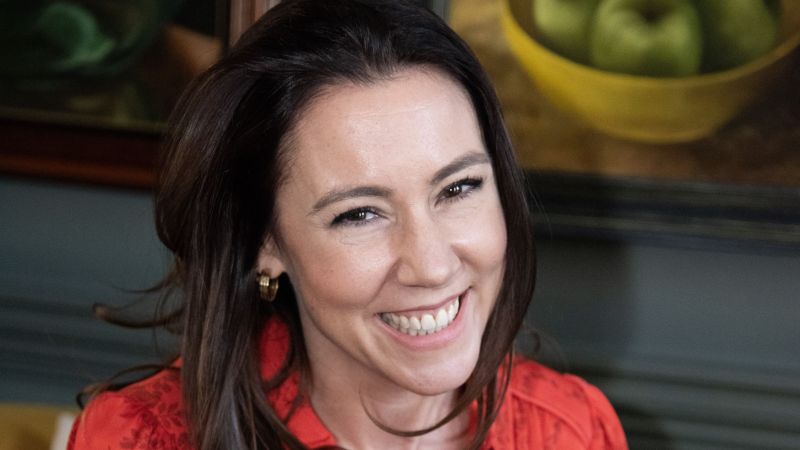
Nonie White • Positive Psychology Practitioner
Nonie White is a certified Positive Psychology Practitioner, Researcher and ICF ACC Coach, who supports... Read more