The Robotaxi Future Won’t Be Decided in Silicon Valley
inDrive founder and CEO Arsen Tomsky says autonomous vehicles will be shaped less by wealthy cities than by fast-growing, price-sensitive megacities in the global south
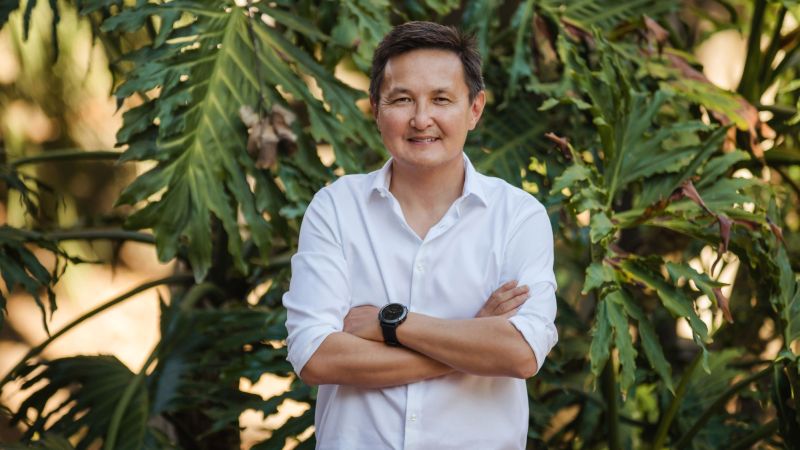
inDrive
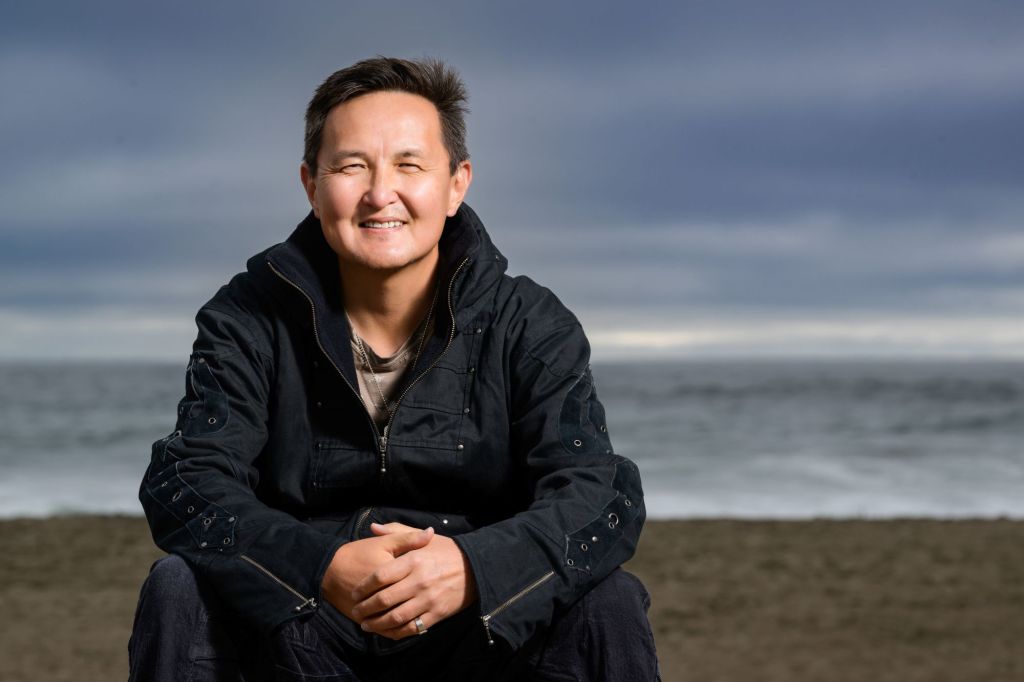
Arsen Tomsky, CEO and Founder at inDrive
Opinions expressed by Entrepreneur contributors are their own.
You're reading Entrepreneur United Kingdom, an international franchise of Entrepreneur Media.
As Western tech giants pour billions into perfecting robotaxis for wealthy cities, Arsen Tomsky sees the future of mobility somewhere very different. He is the founder and CEO of inDrive – a global mobility and delivery platform where passengers and drivers negotiate fares directly – and he believes the real breakthrough won’t come from Silicon Valley, but from the crowded, fast-growing megacities serving the next billion users.
In Yakutsk, one of the coldest cities on Earth, survival has a way of exposing the weaknesses of markets. During a brutal winter in 2012, taxi prices in the remote Siberian city surged sharply as temperatures plunged. Frustrated residents began organising lifts themselves through social media groups, negotiating prices directly with drivers willing to brave the cold.
For Arsen Tomsky, then a local entrepreneur, the episode revealed something larger than a temporary transport crisis. “People began arranging rides directly through social media, agreeing on prices between passengers and drivers,” he recalls. “Instead of copying the traditional ride-hailing model, where the platform sets the price, we built a peer-to-peer marketplace where riders and drivers can negotiate.”
That idea became inDrive, the ride-hailing company Tomsky founded in 2013 – and the philosophical foundation for a business that would eventually expand across 48 countries and more than 1,100 cities, primarily in emerging and frontier markets across Latin America, Middle East, Africa and Asia. Outside China, inDrive has been the world’s second-most downloaded ride-hailing app since 2020, according to Sensor Tower data. Yet Tomsky is already looking at what comes next: autonomous mobility.
For years, the autonomous vehicle industry has sold a familiar vision of the future: fleets of AI-powered robotaxis gliding through wealthy global cities, replacing human drivers with seamless automation. The assumption underpinning much of Silicon Valley’s thinking is that autonomous transport will emerge first – and perhaps primarily – in affluent, highly structured urban environments with modern infrastructure and strong purchasing power. Tomsky thinks that assumption may prove profoundly mistaken. “The industry is built around two assumptions that, in my view, may prove to be wrong,” he says. “First, that autonomous mobility will remain, for many years, mostly limited to developed countries with modern infrastructure and high purchasing power. Second, once robotaxis begin to scale globally, the only business model is to remove drivers from the ecosystem.” Instead, he argues, the future of autonomous mobility may ultimately be decided in the crowded and chaotic cities serving what he repeatedly calls ‘the next billion users’. “The opportunity is not only in launching robotaxis in developed cities,” he says, “affordable autonomous mobility for the next billion users is a huge entrepreneurial opportunity that comes once in decades.”
It is a deliberately contrarian argument at a moment when much of the AV industry remains concentrated in places such as San Francisco, Phoenix, Dubai and parts of China. Companies including Waymo, Tesla and Baidu are racing to refine increasingly sophisticated autonomous systems, pouring billions into AI models, mapping technologies and sensor infrastructure. Yet profitability remains elusive. Regulation varies wildly between countries. Public trust is still fragile. And despite years of promises, fully autonomous transport remains geographically constrained and heavily subsidised.
“The main problem in the AV space today is that the race is mostly happening at the technology level,” Tomsky says. “Much less attention is being paid to the economic model.” He points specifically to the costs involved in western deployment, where autonomous rides are subsidised several dollars per mile. That economic model, he argues, may simply not translate to the places where most future urban growth will occur.
By 2050, nearly 90% of urban population growth is expected to take place in Asia and Africa. Cities such as Lagos, Lahore, Dhaka and Manila are expanding rapidly, often with overstretched infrastructure, fragmented transport systems and highly price-sensitive populations. “A model built for San Francisco or Dubai will not automatically work in Quito, Lagos, Lahore or Manila,” Tomsky says. “Vehicles must be lower-cost, more robust, easier to maintain and adapted to the real urban conditions of different cities.” Those “real urban conditions” are not merely infrastructural challenges. They are behavioural ones too.

In many emerging-market cities, roads function through a mixture of formal rules and informal negotiation. Motorbikes weave unpredictably through traffic. Minibuses stop without warning. Flooding alters routes overnight. Human improvisation often compensates for weak infrastructure. “In my view, the biggest technical challenge in self-driving – the long tail of rare and complex road scenarios, edge cases – may be even longer in emerging-market cities with less organised traffic,” Tomsky says. “AV learning models from Waymo and Tesla, which required millions of miles to cover much of that long tail, may not work in more chaotic road conditions where the long tail is much longer.”
That challenge may force the industry to rethink not only the technology itself but the assumptions underpinning it. Silicon Valley has long operated on the belief that innovation naturally flows outward from wealthy western markets to the rest of the world. Tomsky believes autonomous mobility may evolve differently: fragmented, localised and economically adapted to entirely different urban realities. “We believe autonomous mobility can become affordable and commercially viable in emerging markets sooner than many expect,” he says. “AI is improving rapidly, hardware costs are declining, and deployment models are evolving. But the cars, technology and economics itself should be designed differently.” His critique extends beyond autonomous vehicles into the broader logic of platform capitalism itself.
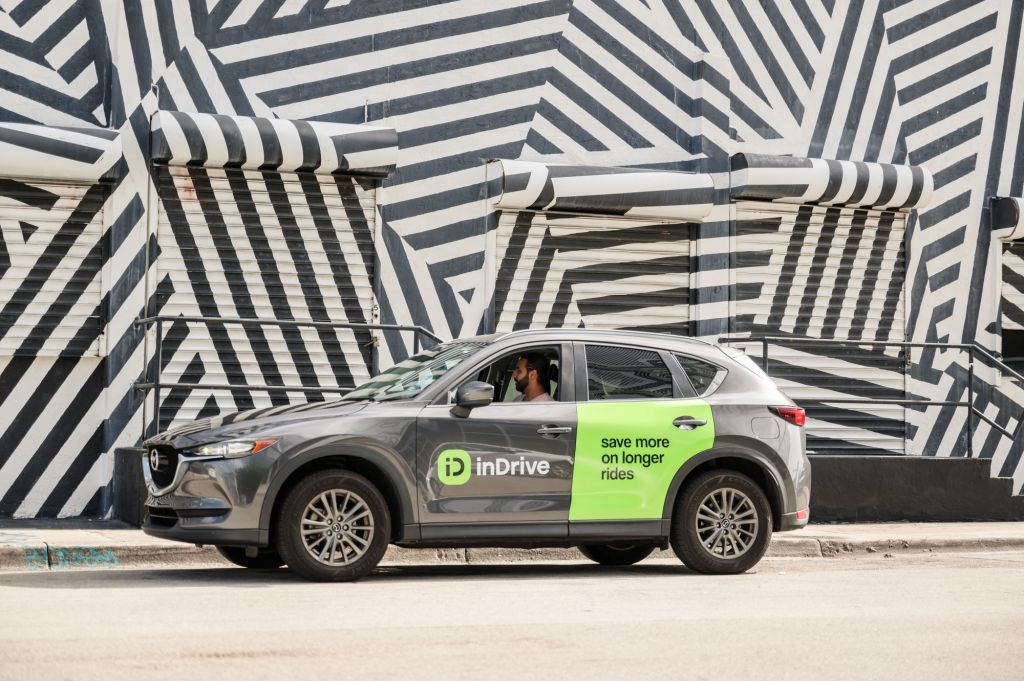
Over the past decade, consumers have become increasingly aware that the algorithms governing ride-hailing, delivery apps and ecommerce platforms are rarely neutral. Prices fluctuate invisibly. Wages shift unpredictably. Dynamic pricing systems optimise relentlessly for extraction. “People are increasingly tired of opaque algorithmic pricing,” Tomsky says. “They do not like the feeling that a black-box system is trying to extract the maximum possible price from them or decide the terms of the transaction on their behalf.” inDrive’s central proposition – negotiated pricing between drivers and passengers – emerged partly as a reaction against that model. “At inDrive, we use algorithms and machine learning, but our philosophy is different,” he says. “Technology should help people make better and faster decisions, not simply decide for them.”
It is a striking position at a time when much of the tech industry is moving in precisely the opposite direction, embedding AI systems ever more deeply into everyday decisions. Autonomous vehicles may intensify those tensions further, requiring people not merely to trust algorithms with pricing or recommendations, but with physical safety itself. For Tomsky, the debate around self-driving cars is inseparable from another question now haunting the AI economy: labour displacement.
Across Africa, Latin America and Asia, millions of people rely on ride-hailing and delivery platforms as primary or supplementary income. In countries with weak labour markets and limited social protections, fully autonomous fleets could have enormous social consequences. “We believe the strongest business model may not be to eliminate drivers, but to help them become micro-fleet owners, operators and local partners in autonomous mobility,” Tomsky says.
The concept reflects a very different vision of automation from the one often promoted by western technology companies. Rather than removing people from the system entirely, Tomsky imagines drivers transitioning into small-scale operators managing autonomous fleets within local communities. “This can preserve work for millions of people in countries with a fragile labour-force balance,” he says, “and allow ride-hailing platforms to build a decentralised, operationally and financially efficient micro-fleet model.”
Whether such a model can scale remains uncertain. Autonomous fleets are expensive, technically complex and heavily dependent on regulation and infrastructure. But Tomsky argues that preserving economic participation is not merely socially desirable – it is commercially necessary. “If drivers feel the platform works in their interests, they stay,” he says. “If users feel they have more control, they come back.” That emphasis on sustainability also reflects a broader shift underway across the tech sector. After years of investor-fuelled expansion and subsidy-heavy growth, many mobility companies are now under pressure to prove their economics actually work. “We don’t believe in a model built on massive subsidies that lead to large financial losses,” Tomsky says. “What we have seen is that the market now requires companies to have sound internal economics.”
For governments, meanwhile, autonomous mobility increasingly looks less like a transport issue than an industrial one. “It affects productivity, access to work, logistics, road safety and the competitiveness of cities,” Tomsky says. Countries that establish footholds early, he argues, could build industries around charging infrastructure, maintenance, fleet operations, mapping and AI training. Those that fail to adapt risk becoming dependent consumers of technologies designed elsewhere for entirely different conditions. “If emerging markets participate in this process early, AV can create new services around fleet ownership, maintenance, charging infrastructure, data, operations and local infrastructure,” he says.
inDrive is now attempting to position itself accordingly. The company says it plans to develop an open autonomous vehicle platform focused specifically on emerging markets, sharing operational expertise, local data and network infrastructure with researchers, automakers and AI developers building systems for more complex urban environments. “It will require coordinated work among mobility platforms, AV companies, OEMs, hardware suppliers, AI developers, universities and regulators,” Tomsky says. Perhaps. Or perhaps the sheer unpredictability of many emerging-market cities will slow autonomous deployment for far longer than the industry currently imagines.
Still, Tomsky’s argument lingers because it challenges one of the technology sector’s deepest assumptions: that the future is designed primarily around wealthy western cities and exported outward to everyone else. The origins of inDrive itself suggest something messier. Its founding insight did not emerge from a Silicon Valley lab or an AI research centre. It emerged during a Siberian freeze, when ordinary people rejected a pricing system they considered unfair and improvised something more flexible in its place.
The next mobility revolution, Tomsky believes, may unfold similarly – not as a pristine technological rollout engineered for affluent early adopters, but as a negotiation between automation, economics and survival in the crowded cities where most of the world actually lives. “The long-term opportunity is incredible for everyone – societies, businesses, riders and, I believe, drivers,” he says. “To realise it, we need to create win-win-win models.”
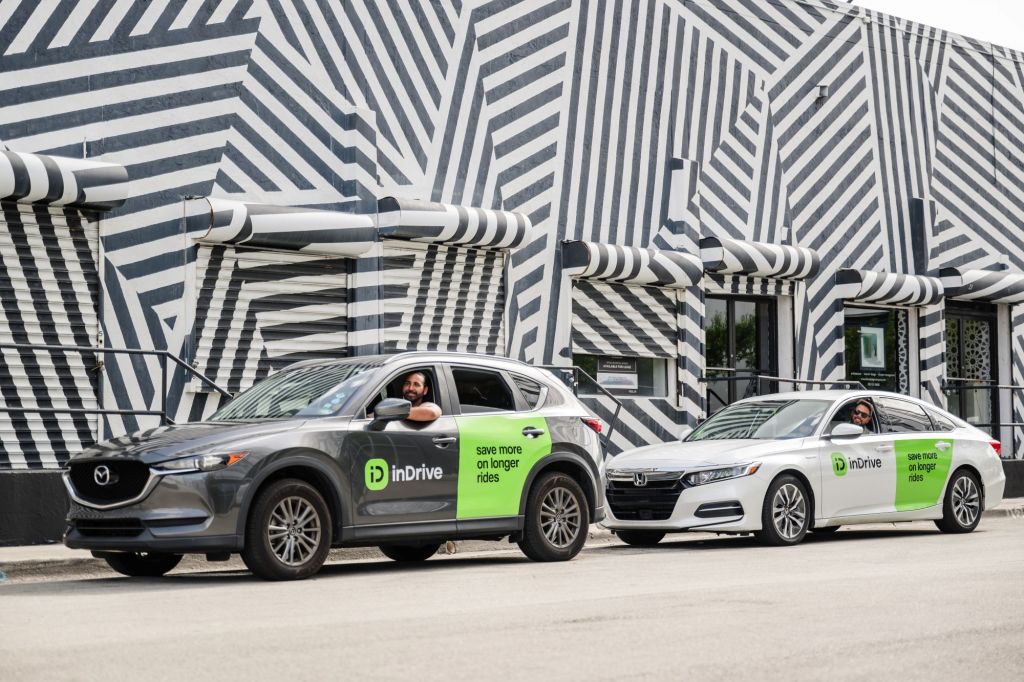
As Western tech giants pour billions into perfecting robotaxis for wealthy cities, Arsen Tomsky sees the future of mobility somewhere very different. He is the founder and CEO of inDrive – a global mobility and delivery platform where passengers and drivers negotiate fares directly – and he believes the real breakthrough won’t come from Silicon Valley, but from the crowded, fast-growing megacities serving the next billion users.
In Yakutsk, one of the coldest cities on Earth, survival has a way of exposing the weaknesses of markets. During a brutal winter in 2012, taxi prices in the remote Siberian city surged sharply as temperatures plunged. Frustrated residents began organising lifts themselves through social media groups, negotiating prices directly with drivers willing to brave the cold.
For Arsen Tomsky, then a local entrepreneur, the episode revealed something larger than a temporary transport crisis. “People began arranging rides directly through social media, agreeing on prices between passengers and drivers,” he recalls. “Instead of copying the traditional ride-hailing model, where the platform sets the price, we built a peer-to-peer marketplace where riders and drivers can negotiate.”

Patricia Cullen • Features Writer
Entrepreneur Staff