How to Scale Products That Never Behave the Same Way Twice
Flickr
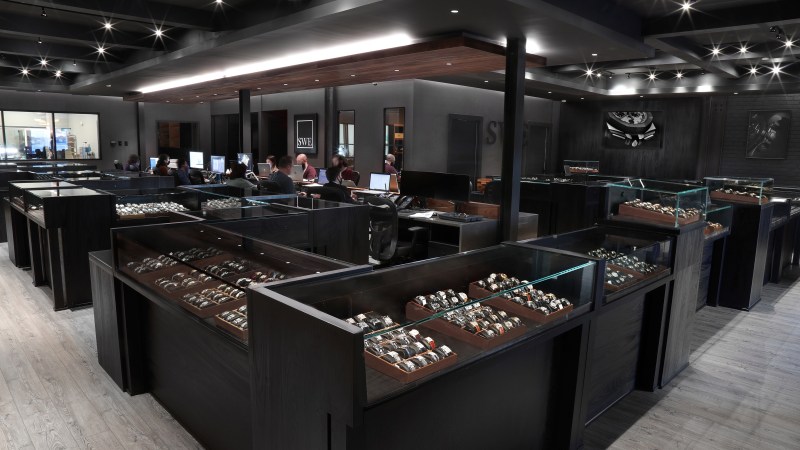
Most ecommerce advice rests on a basic assumption: the product is stable. One SKU means one set of photos, one description, one pricing logic, one fulfillment path, and one set of customer expectations. Sell enough of those, refine the playbook, and scale becomes a matter of marketing efficiency and operational discipline. That logic works well for standardized goods. It becomes far less reliable when a business is built around inventory that appears similar on paper but behaves differently item by item. The resale market lives in that gap, and the pre-owned luxury watch business is one of the clearest examples. Atlanta-based SwissWatchExpo, founded in 2009, operates from a Buckhead showroom and says the watches listed on its site are physically in stock there rather than brokered from elsewhere. That matters, because it turns what might look like a straightforward ecommerce storefront into a much more demanding exercise in inventory control, inspection, preparation, pricing, and trust.
The broader context matters. The secondary watch trade is no longer a side alley of luxury retail but a market shaped by tighter pricing visibility, more sophisticated buyers, and a wider mix of specialist dealers, marketplaces, and authentication-led operators. What used to look like an enthusiast niche now behaves more like an information business, where condition, provenance, presentation, and speed of fulfillment can materially affect what an item is worth and how quickly it moves. In that environment, the companies worth watching are not simply the ones with desirable inventory. They are the ones that can reduce uncertainty around irregular goods without pretending those goods are uniform.
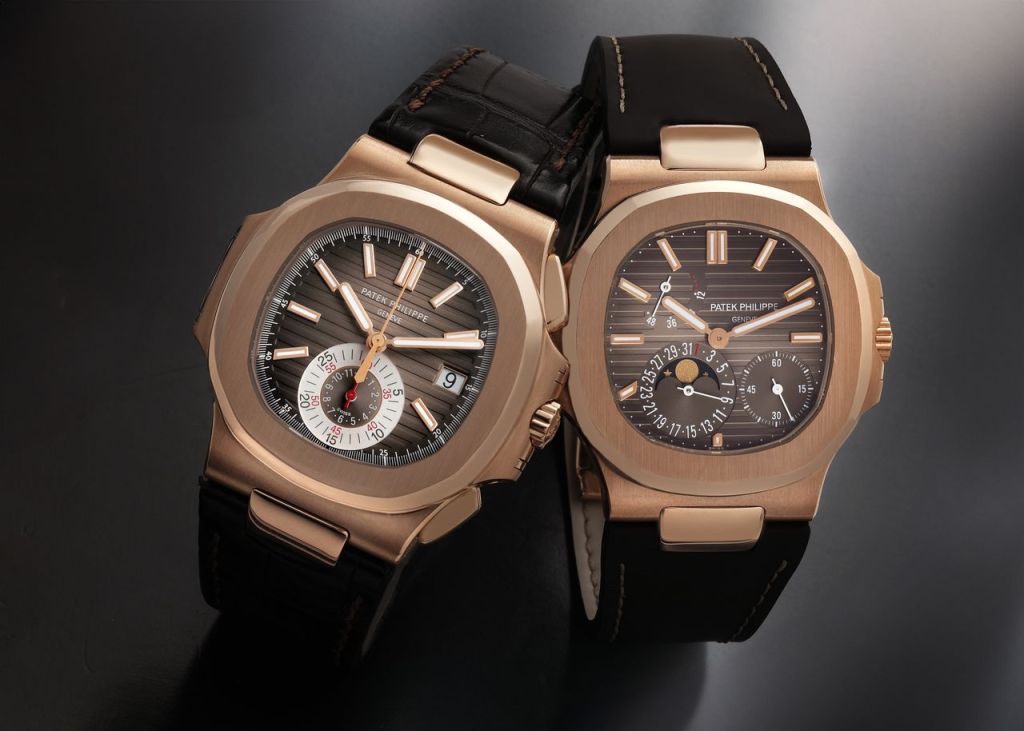
What makes the pre-owned watch business different is that it breaks the idea of sameness. Two watches may share a brand, model name, and reference number and still be very different products in practical terms. One may come with the original box and papers; another may not. One may have a cleaner service history, sharper case lines, fewer replacement parts, stronger resale appeal, or simply a better visual presence. One may need nothing more than photography and copy before going live; another may require inspection, polishing, repair, parts replacement, or a more careful explanation to justify its price. In other words, the catalog may look standardized from the outside, while the operation behind it is defined by constant variation. That makes SwissWatchExpo a revealing example of a broader operating problem in resale. The real story is not watches treated as objects. It is what happens when a business has to build repeatability around goods that refuse to behave in a repeatable way.
That challenge begins at intake. In most modern retail businesses, receiving inventory is largely administrative. Units arrive, get counted, matched to a system, and routed toward storage or sale. In pre-owned watches, intake looks much more like assessment. The item has to be authenticated, evaluated for originality, checked for mechanical and cosmetic condition, and then placed into a series of decisions. Is it ready to list as-is? Does it need restoration? Is the condition commercially acceptable but less visually appealing? Are there missing papers that make it harder to sell? Will the likely customer need more explanation than a standard product page would usually provide? SwissWatchExpo says every timepiece it buys and sells is inspected by its in-house team, and that the same service division underpins both the retail and repair sides of the business. That means intake is not a back-office formality. It is the point where value is preserved, clarified, or lost.
That distinction also helps explain why not every resale operator is solving the same problem in the same way. Some businesses rely more heavily on marketplace dynamics, where the platform helps create trust but does not fully control the unit. Others take a more inventory-led approach, bringing authentication, servicing, photography, and merchandising closer together under one roof. The commercial trade-off is obvious: tighter control can make the customer offer clearer, but it also creates a business that is harder to run. In resale, confidence is rarely free. Someone has to absorb the cost of producing it.
What matters beyond watches is the operating model, not the category itself. Scale is often described as the art of reducing variation. But some businesses cannot remove variation from the product itself, so they have to absorb it somewhere else. They do that by standardizing the process around the product rather than the product itself. In a business like SwissWatchExpo, that likely means fixed checkpoints, clear quality thresholds, structured handoffs between sourcing, inspection, repair, photography, merchandising, and sales, and disciplined rules about what can be listed, when, and how. The point is not to pretend every item is the same. The point is to make sure the organization responds to differences in a consistent way.
Physically held inventory makes that discipline even more important. SwissWatchExpo emphasizes that all of the watches listed on its website are physically located in its showroom and that it uses actual photos of the watch being sold. It also promotes same-day shipping, an 18-month warranty, and a 10-day return policy. Taken together, those policies point to a model built around tighter pre-sale control rather than a looser marketplace model. You cannot make them consistently unless the hard internal work has already been done before the customer clicks “buy.” Authentication, condition grading, preparation, and catalog control have to happen upstream. In categories built around unique or semi-unique inventory, trust is rarely created by branding alone. It is created by the sequence of backstage decisions that makes the front-end promise believable.
But that model carries its own burdens. Holding inventory directly can improve control, yet it also ties up capital, increases exposure to slower-moving stock, and raises the operational cost of preparation before a watch ever reaches the site. In categories where one item may need little more than documentation while another requires service work, polishing, or a more careful pricing explanation, scale is not just a question of demand. It is also a question of how much variation the business can absorb without creating delays, inconsistency, or pressure on margins.
That shift also reflects how buyers now shop. In the pre-owned segment, the customer is often evaluating not just a brand or reference, but a bundle of uncertainties: originality, wear, service history, completeness, presentation, and resale appeal. That changes what a product page is supposed to do. It is no longer just a sales surface. It becomes part documentation function, part trust mechanism, and part pricing argument. For operators in this category, merchandising is therefore much closer to reducing buyer uncertainty than to conventional ecommerce display.
That is also why content becomes part of the operating model rather than a layer on top of it. A repeatable SKU can live off a master description and a bank of approved images. A unique SKU cannot. In pre-owned watches, the commercial value of the item is tied directly to the credibility of how it is presented. Customers are not just buying a Rolex or an Omega in general terms. They are buying this watch, with this dial, this case condition, this bracelet stretch, this service state, and this set of included materials. The listing is not just marketing. It is part of the product. That pushes photography, editing, copy discipline, and condition language out of the nice-to-have category and into the center of the business. Even small inconsistencies can become expensive when the customer is buying at a distance and the item is both valuable and non-uniform. SwissWatchExpo’s model of holding inventory in-house and using actual images of the specific watch for sale suggests a business built around that reality rather than one trying to smooth it over.
Pricing follows the same logic. Standard goods are typically priced through market comparison and margin rules. Unique goods require judgment. A watch may have a reference number, but it also has a condition story, a completeness story, and a sales speed story. Some units will move quickly because the configuration is strong and the condition is clean. Others may need sharper pricing, stronger explanation, or more patience. That creates a more demanding form of merchandising, one that blends product expertise with discipline around how fast stock moves. A business that gets this wrong either leaves money on the table or clogs itself with slow-moving, misunderstood stock. That is one reason the process matters more than the appeal of the category. The romance of luxury watches may attract attention, but it does not solve the harder problem of moving hundreds or thousands of irregular items through one commercial system without letting the system break down.
The wider market makes that point even clearer. Pre-owned watches have become a meaningful and growing part of the wider luxury watch market, with major consulting and research firms describing a large secondary segment that has expanded faster than the primary one in recent years. That growth brings more buyers, more sellers, and more platforms into the space, but it also raises the bar for reliable execution. As the market matures, customers do not just want access. They want assurance. The businesses that do best are not simply the ones with attractive inventory. They are the ones that can turn messy real-world objects into a buying experience that feels clear, reliable, and worth trusting. SwissWatchExpo sits squarely inside that wider shift, where resale businesses are increasingly judged on how well they reduce uncertainty around the specific item being sold.
That is also what makes this story relevant beyond watches. Replace watches with handbags, sneakers, trading cards, used camera equipment, refurbished industrial machinery, or collectible design pieces, and the underlying logic still holds. In all of those categories, the unit may look similar on paper while differing sharply in ease of sale, margin potential, prep requirements, and customer education burden. Founders in these businesses are not scaling sameness. They are scaling a response to difference. The winners are not the ones that tell the best brand story. They are the ones that design the best process around intake, assessment, restoration, documentation, pricing, and fulfillment.
That is why the most interesting thing about SwissWatchExpo is not prestige. It is the structure. According to SwissWatchExpo, the company has bought and sold more than 65,000 watches and built an in-house team of more than 10 watchmakers, technicians, and polishers. Looked at this way, SwissWatchExpo is less interesting as a luxury retailer than as an example of what resale businesses have to become once the unit itself stops behaving like a standard SKU. The company’s relevance is not that it sells expensive watches. It is that the category forces operators to turn assessment, preparation, documentation, and fulfillment into a single commercial system. That is the broader lesson here. Scale does not always come from making the product more uniform. Sometimes it comes from building an organization that knows exactly how to handle differences between items, every single time. In a business world still obsessed with easy growth, that may be the more durable lesson: do not force inventory to behave like software. Build a system strong enough to handle variation and still deliver trust at speed.
Most ecommerce advice rests on a basic assumption: the product is stable. One SKU means one set of photos, one description, one pricing logic, one fulfillment path, and one set of customer expectations. Sell enough of those, refine the playbook, and scale becomes a matter of marketing efficiency and operational discipline. That logic works well for standardized goods. It becomes far less reliable when a business is built around inventory that appears similar on paper but behaves differently item by item. The resale market lives in that gap, and the pre-owned luxury watch business is one of the clearest examples. Atlanta-based SwissWatchExpo, founded in 2009, operates from a Buckhead showroom and says the watches listed on its site are physically in stock there rather than brokered from elsewhere. That matters, because it turns what might look like a straightforward ecommerce storefront into a much more demanding exercise in inventory control, inspection, preparation, pricing, and trust.
The broader context matters. The secondary watch trade is no longer a side alley of luxury retail but a market shaped by tighter pricing visibility, more sophisticated buyers, and a wider mix of specialist dealers, marketplaces, and authentication-led operators. What used to look like an enthusiast niche now behaves more like an information business, where condition, provenance, presentation, and speed of fulfillment can materially affect what an item is worth and how quickly it moves. In that environment, the companies worth watching are not simply the ones with desirable inventory. They are the ones that can reduce uncertainty around irregular goods without pretending those goods are uniform.
What makes the pre-owned watch business different is that it breaks the idea of sameness. Two watches may share a brand, model name, and reference number and still be very different products in practical terms. One may come with the original box and papers; another may not. One may have a cleaner service history, sharper case lines, fewer replacement parts, stronger resale appeal, or simply a better visual presence. One may need nothing more than photography and copy before going live; another may require inspection, polishing, repair, parts replacement, or a more careful explanation to justify its price. In other words, the catalog may look standardized from the outside, while the operation behind it is defined by constant variation. That makes SwissWatchExpo a revealing example of a broader operating problem in resale. The real story is not watches treated as objects. It is what happens when a business has to build repeatability around goods that refuse to behave in a repeatable way.