In the Net
Gate bets on Inter Milan’s legacy, growth, global influence, and future success.
Gate
FC Internazionale Milano
Opinions expressed by Entrepreneur contributors are their own.
You're reading Entrepreneur United Kingdom, an international franchise of Entrepreneur Media.
As crypto searches for cultural legitimacy in European football, Gate’s Chief Marketing Officer, Kyle Chiu explains why Inter Milan was chosen as a long-term partner – not a marketing shortcut, but a strategic alignment of trust, audiences, and identity.
When Gate’s logo first appeared alongside FC Internazionale Milano, it could easily have been read as another entry in football’s now-familiar crypto sponsorship cycle – a sector that has cycled through visibility plays, volatility, and recalibration in equal measure. But for Chiu, the Inter deal sits in a very different register: less opportunistic activation, more decade-long positioning. “Our vision for the European market began taking shape nearly a decade ago when we first planned our MiCA licensing strategy,” he says. “Inter Milan was the natural fit – few clubs carry that level of influence and cultural weight across the continent. When you’re serious about Europe, Inter is the partner that makes sense.”
The reference point here is not simply sporting prestige, but regulatory architecture. MiCA – the European Union’s Markets in Crypto-Assets framework – has reshaped how digital asset firms think about legitimacy in the region. Gate’s framing of Inter as part of that same timeline signals an attempt to anchor marketing decisions inside regulatory and institutional strategy, rather than separate from it. But strategy alone rarely explains football partnerships. Clubs like Inter are not just commercial platforms; they are inherited identities, shaped by generations of supporters and decades of European nights. For Chiu, that history was not incidental – it was decisive. “The values align almost instinctively. Trust and legacy aren’t just words for Inter – they’re the same pillars Gate was built on. With over 53 million users, we’re one of the most established exchanges in the space, and we wanted a partner whose history and reputation matched that standard.”
It is a deliberate attempt to draw equivalence between two very different kinds of institutions: one rooted in the rhythms of financial markets and digital infrastructure, the other in the rituals of Italian football. Yet the connective tissue, in his telling, is durability – the ability to outlast cycles of hype, performance dips, and narrative shifts. That question of durability becomes more complicated when it meets football’s most sensitive audience: its fans. In European football especially, sponsorship is tolerated, even embraced, but authenticity is constantly tested. Supporters are fluent in commercial language – and quick to reject what feels hollow. “Football fans have finely tuned instincts for what’s real and what’s just commercial noise,” Chiu says. “Our approach has always been integration over interruption – we want to show up in ways with true fan engagement that genuinely add value to the Inter experience, not just occupy space on a shirt.”
The phrasing reflects a broader evolution in how crypto firms are attempting to reposition themselves inside elite sport. The early phase – defined by shirt deals, naming rights, and rapid visibility grabs – has given way to a more cautious emphasis on embeddedness. The aim is no longer simply to be seen, but to be accepted. If Europe is the strategic entry point, Inter’s global footprint is what makes the relationship commercially coherent. Few clubs can match its blend of continental identity and international reach, stretching across some of the fastest-growing consumer markets in sport and finance alike. “Inter’s footprint across Europe, the Middle East, Asia, and Latin America maps almost perfectly onto our growth markets,” he explains. “That kind of organic geographic alignment is rare. We’re not forcing our brand into new territories – Inter is already there, and we’re proud to walk in alongside them.”
In contrast to traditional market expansion – which relies on localised entry strategies – football offers something pre-built: communities, narratives, emotional loyalty. The implication is that Gate is not manufacturing presence, but inheriting it. That shift from exposure to credibility is, for Chiu, the real evolution in how football partnerships are now being understood at the highest level of brand strategy. “The most sophisticated brands in this space have stopped treating football as simply a media buy,” he says. “The real value is credibility – being associated with institutions that mainstream audiences already trust. For Gate, being alongside Inter signals that we are here for the long term, not the next cycle.”
It is a notable departure from the short-term logic that has often defined crypto’s engagement with sport. Where earlier deals were measured in impressions and acquisition spikes, this framing leans heavily on perception, legitimacy, and institutional association – softer metrics, but arguably more durable ones. Still, beneath the strategy is something more human: the overlap between football’s emotional economy and crypto’s community-driven culture. On the surface, one is physical and inherited, the other digital and constructed. But Chiu sees a shared underlying structure. “Both worlds run on culture, performance, and community,” he says. “A crypto holder who believes in a project or exchange and an Inter fan who bleeds black and blue are expressing the same human instinct – belonging to something bigger than themselves. That’s a connection we take seriously.”
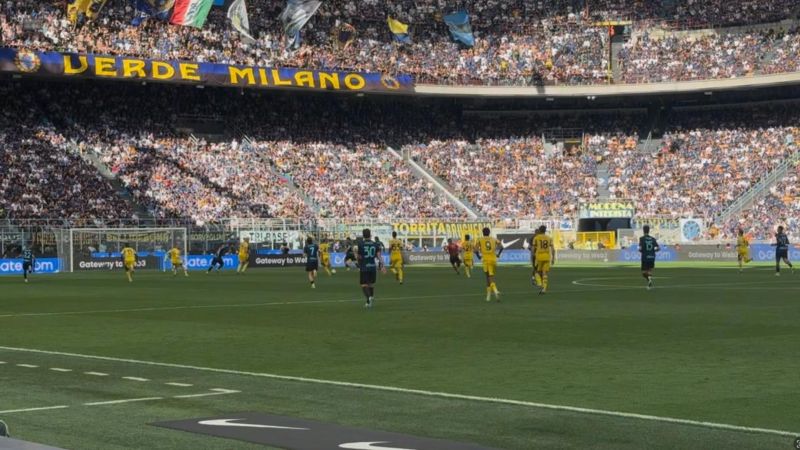
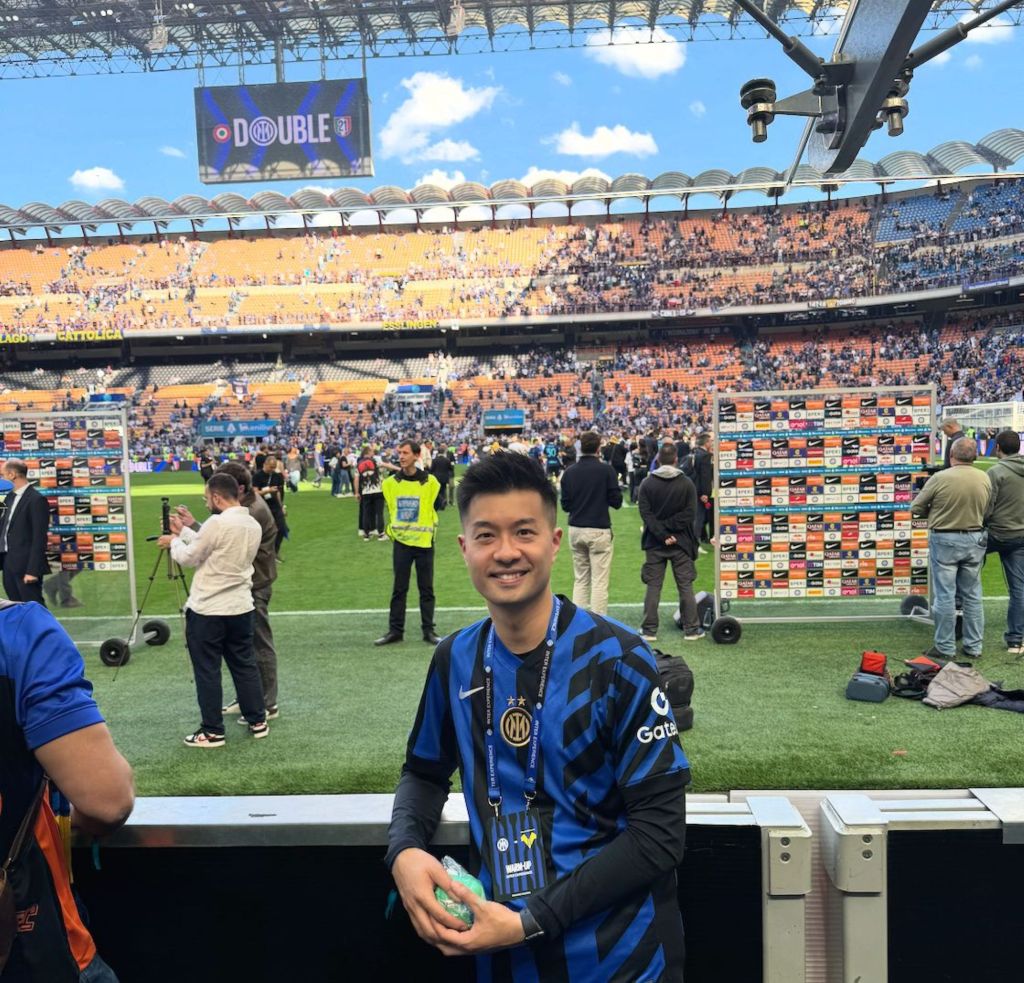
It is an argument about identity as much as marketing – about how allegiance forms in systems built on belief, whether that belief is directed at a club or a protocol. In both cases, value is reinforced through participation as much as outcome. Yet for all the conceptual overlap, football retains one advantage that digital platforms cannot replicate: physical presence. The stadium remains a rare space where brand narratives are not mediated through screens or algorithms, but experienced collectively and in real time. “San Siro doesn’t need an algorithm,” Chiu says. “When 75,000 people are inside that stadium chanting and celebrating together, the emotional intensity of that moment is something no digital campaign can replicate. I experienced that first-hand. Physical presence in football carries a weight that reminds you why brand-building is still as much an art as science.”
The image of San Siro – vast, noisy, resistant to optimisation – stands in contrast to the data-driven world in which crypto firms typically operate. And yet, it is precisely that contrast that makes football so valuable to them now: not as a channel, but as a counterweight. What emerges from Chiu’s reflections is less a sponsorship pitch than a recalibration of how legitimacy is built in a crowded, sceptical market. Inter Milan offers history; Gate offers scale. One provides emotional inheritance, the other digital infrastructure. The partnership sits somewhere between the two – and is betting that, in modern sport, that middle ground is where credibility now lives.
As crypto searches for cultural legitimacy in European football, Gate’s Chief Marketing Officer, Kyle Chiu explains why Inter Milan was chosen as a long-term partner – not a marketing shortcut, but a strategic alignment of trust, audiences, and identity.
When Gate’s logo first appeared alongside FC Internazionale Milano, it could easily have been read as another entry in football’s now-familiar crypto sponsorship cycle – a sector that has cycled through visibility plays, volatility, and recalibration in equal measure. But for Chiu, the Inter deal sits in a very different register: less opportunistic activation, more decade-long positioning. “Our vision for the European market began taking shape nearly a decade ago when we first planned our MiCA licensing strategy,” he says. “Inter Milan was the natural fit – few clubs carry that level of influence and cultural weight across the continent. When you’re serious about Europe, Inter is the partner that makes sense.”
The reference point here is not simply sporting prestige, but regulatory architecture. MiCA – the European Union’s Markets in Crypto-Assets framework – has reshaped how digital asset firms think about legitimacy in the region. Gate’s framing of Inter as part of that same timeline signals an attempt to anchor marketing decisions inside regulatory and institutional strategy, rather than separate from it. But strategy alone rarely explains football partnerships. Clubs like Inter are not just commercial platforms; they are inherited identities, shaped by generations of supporters and decades of European nights. For Chiu, that history was not incidental – it was decisive. “The values align almost instinctively. Trust and legacy aren’t just words for Inter – they’re the same pillars Gate was built on. With over 53 million users, we’re one of the most established exchanges in the space, and we wanted a partner whose history and reputation matched that standard.”

Patricia Cullen • Features Writer
Entrepreneur Staff