‘Sorry… who’s actually in charge here?’
Rachel Watkyn exposes sexism, funding gaps and modern female leadership realities.
May 19, 2026
Tiny Box Company
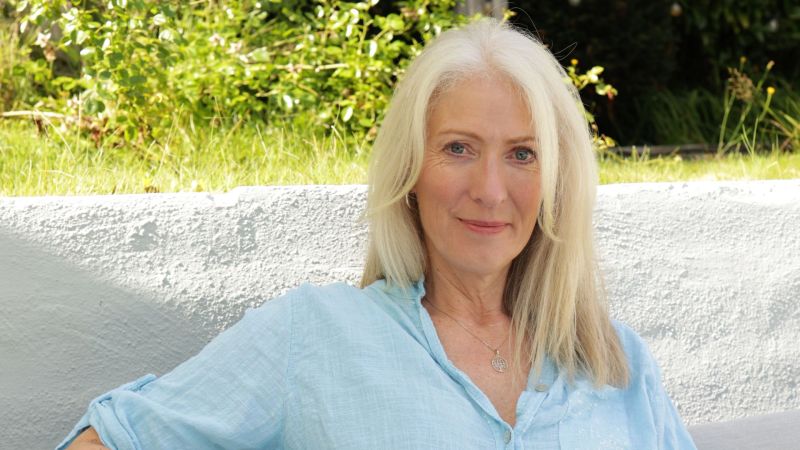
Rachel Watkyn OBE, founder, Tiny Box Company
By any measure, Rachel Watkyn OBE is one of Britain’s entrepreneurial success stories. The founder of Tiny Box Company, now the UK’s largest e-commerce packaging business, has built a company turning over £10m while pioneering sustainable packaging long before “eco-conscious” became a boardroom buzzword.
Yet even now, after years of scaling a nationally recognised company, she still finds herself navigating assumptions that many male founders never encounter. “One of the biggest challenges has been simply being taken seriously,” she says. “Even now, it still happens.” Watkyn recalls a recent encounter at Badminton Horse Trials where, after mentioning she ran her own company, someone casually replied: “Oh, what, around the kitchen table?” The remark was dismissive, but familiar. More revealing, she says, are the quieter moments of institutional bias embedded into everyday business interactions. “I’ve had meetings with suppliers, landlords, and estate agents where they’ve automatically directed questions to my husband instead of me,” she says. “I remember one particular meeting in a field with three agents, they stood with their backs to me, speaking only to him. It was only when he couldn’t answer a question and I stepped in that they turned around, slightly embarrassed, and asked, ‘Sorry… who’s actually in charge here?’”
For Watkyn, the issue is not simply anecdotal. It reflects a wider imbalance that continues to define British entrepreneurship. Despite years of public discussion around diversity in business, female founders in the UK still receive only a fraction of available investment capital. “What’s striking is that, in some ways, it feels like we’ve gone backwards,” she says. “The data supports that – only around 2% of funding goes to female-led businesses, which is staggering.” Her assessment of modern business culture is notably unsentimental. While many companies publicly champion inclusion, Watkyn believes there is simultaneously “a broader cultural shift happening, with more emphasis being placed on ‘masculinity’ in business spaces, which can reinforce these biases.” Still, her response has never been confrontation for its own sake. “I don’t believe in meeting it with aggression or lowering myself to that level,” she says. “Most of the time, it’s unconscious bias rather than deliberate disrespect. So I try to handle it with confidence and calm authority, proving capability rather than arguing for it.”
That approach has shaped her leadership style more broadly. Watkyn describes herself as naturally empathetic and people-focused – traits often coded as “soft” within traditional corporate culture but which helped build a fiercely loyal workforce during Tiny Box Company’s rapid growth. “I’ve always believed in putting my team first and creating a positive, nurturing culture,” she says. But experience, she admits, has altered her understanding of leadership. “That approach can sometimes be taken advantage of,” she says. “There have been times where employees have come to me for extra support, even things like personal loans, and my instinct is always to listen and help where I can.” Over time, however, she realised empathy alone could not sustain a growing company.
“I’ve had to toughen up, be more decisive, and not accept excuses in the same way I might have earlier on,” she says. “In the past, if someone wasn’t quite right for a role, I’d try to find somewhere else for them within the business. Now, I recognise that if someone doesn’t fit the culture, it’s better for everyone to address that honestly and move on.” It is a strikingly modern articulation of female leadership: not rejecting compassion, but refusing to see it as incompatible with authority. “So it’s been about balance,” she says. “Keeping that empathy and emotional intelligence, but pairing it with strength, clarity, and boundaries.”
Balancing work with family life is another area where Watkyn speaks with unusual candour. Rather than presenting herself as someone who has “figured it all out”, she frames success as a process of constant adjustment. “I feel very lucky that my husband, Steve, works closely with me – having that support makes a huge difference,” she says. “That said, I do think as women we’re naturally used to juggling multiple responsibilities. We tend to just get on with it.” That adaptability, she believes, is one of women’s underestimated strengths in business.
“For me, it’s about being adaptable and creative with my time,” she says. “Not every day looks the same, and I’ve learned to be flexible in how I structure both work and family life.” If there is one issue that repeatedly surfaces throughout the conversation, though, it is access to finance. Watkyn returns to it again and again – not as an abstract policy concern, but as a practical barrier that shapes whose businesses survive long enough to scale.
“Not at all,” she says, when asked whether funding opportunities are equal. “In fact, I think in many ways we’ve gone backwards. A big part of the issue is that people tend to invest in those they relate to or feel familiar with,” she says. “As the majority of venture capitalists are still men, there’s a natural bias, often unconscious, that means women are overlooked.” She has experienced it personally. “If I reach out to a VC, I’m far less likely to get a response than if my male business partner makes the exact same approach,” she says.
And while conversations about confidence gaps often dominate discussions around female entrepreneurship, Watkyn believes that framing misses the point. “There’s also a confidence gap that comes into play, but I think that’s often a result of the environment women are operating in, rather than a lack of capability.” For the next generation of women founders, she argues, change requires both practical and cultural transformation. “The biggest immediate change would be access to more funding for women – that’s the foundation,” she says. “Without capital, it’s incredibly difficult to scale, no matter how strong the business is.” But visibility matters too.
“If you asked most 18-year-olds today to name five female business leaders, they would struggle,” she says. “And yet, there are incredible women who’ve built hugely successful companies – they’re just not talked about enough.” She points to Dame Stephanie Shirley, the pioneering tech entrepreneur who famously signed letters as “Steve” in the 1960s simply to secure meetings with male executives. “She built a billion-dollar tech business back in the 1960s, but had to sign off as ‘Steve’ just to be taken seriously,” Watkyn says. “She was operating at the level of today’s biggest tech founders, yet her name still isn’t widely recognised.” There is frustration in her voice when discussing the persistence of outdated assumptions around motherhood and ambition. “I know women who’ve been turned down for funding simply because they’re of childbearing age,” she says. “Which is extraordinary in this day and age.”
Yet despite the barriers, Watkyn remains optimistic about the future of female-led businesses – partly because she believes women founders often build companies differently. “There’s a misconception around female-led businesses,” she says, “when in reality they are often highly profitable and purpose-driven.” And perhaps that is the contradiction at the heart of Rachel Watkyn’s story: a business leader who has spent years proving herself in rooms where people still assume someone else must be in charge – and who built a £10m company anyway.
By any measure, Rachel Watkyn OBE is one of Britain’s entrepreneurial success stories. The founder of Tiny Box Company, now the UK’s largest e-commerce packaging business, has built a company turning over £10m while pioneering sustainable packaging long before “eco-conscious” became a boardroom buzzword.
Yet even now, after years of scaling a nationally recognised company, she still finds herself navigating assumptions that many male founders never encounter. “One of the biggest challenges has been simply being taken seriously,” she says. “Even now, it still happens.” Watkyn recalls a recent encounter at Badminton Horse Trials where, after mentioning she ran her own company, someone casually replied: “Oh, what, around the kitchen table?” The remark was dismissive, but familiar. More revealing, she says, are the quieter moments of institutional bias embedded into everyday business interactions. “I’ve had meetings with suppliers, landlords, and estate agents where they’ve automatically directed questions to my husband instead of me,” she says. “I remember one particular meeting in a field with three agents, they stood with their backs to me, speaking only to him. It was only when he couldn’t answer a question and I stepped in that they turned around, slightly embarrassed, and asked, ‘Sorry… who’s actually in charge here?’”
For Watkyn, the issue is not simply anecdotal. It reflects a wider imbalance that continues to define British entrepreneurship. Despite years of public discussion around diversity in business, female founders in the UK still receive only a fraction of available investment capital. “What’s striking is that, in some ways, it feels like we’ve gone backwards,” she says. “The data supports that – only around 2% of funding goes to female-led businesses, which is staggering.” Her assessment of modern business culture is notably unsentimental. While many companies publicly champion inclusion, Watkyn believes there is simultaneously “a broader cultural shift happening, with more emphasis being placed on ‘masculinity’ in business spaces, which can reinforce these biases.” Still, her response has never been confrontation for its own sake. “I don’t believe in meeting it with aggression or lowering myself to that level,” she says. “Most of the time, it’s unconscious bias rather than deliberate disrespect. So I try to handle it with confidence and calm authority, proving capability rather than arguing for it.”