Reinerstrom : Why Local Insight and Structural Clarity Support Growth in Central America
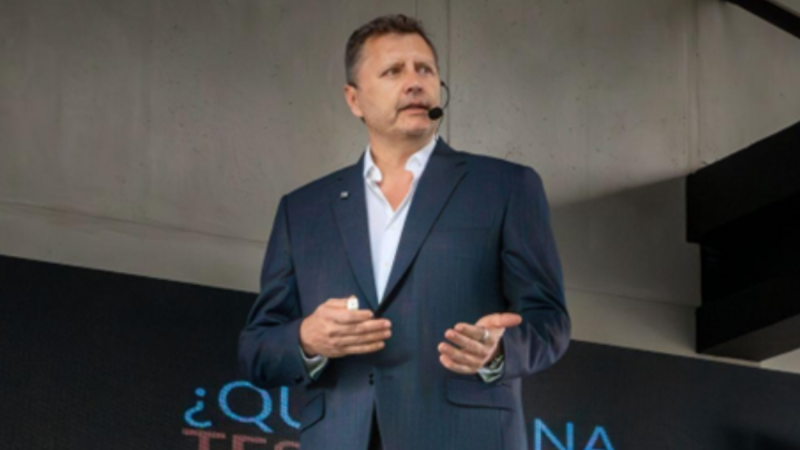
A local approach to energy infrastructure challenges the assumptions that have long kept emerging markets on the sidelines, and reveals why discipline and real-world execution matter more than rhetoric.
As chief executive officer and founder of Reinerstrom, Frederick Gimpel’s work is defined by a unique kind of discipline. Operating in industries where infrastructure, governance, and capital do not necessarily align, he relies on his personal dedication to wake early and meet the markets where they are.
This schedule allows Gimpel to maintain an unusually clear perspective: the very obstacles that slow emerging markets are the same ones that create their potential. As he has said, “The things that create the barriers also create the opportunities.” Of course, one’s schedule is not the only requirement of an effective business strategy. Rather, leaders must be prepared to navigate with confidence and clarity.
Gimpel moves through his work with the blunt honesty of someone who has lived a lifetime in the region he now seeks to transform. This approach is reflected in his company’s ongoing ascent, as well as its notable resilience. In his hands, renewable energy is not a climate crusade as much as it is a structural correction, one grounded in asset ownership, financial discipline, and the value of transparency.
An Active Transition From Theory to Execution
Rich in both culture and natural beauty, Central America is an altogether distinct environment for business-building. Recognizing this, Gimpel does not romanticize the region. He has navigated false starts and inconsistencies, but has always refused to accept that progress can be hindered by a degree of dysfunction. His insistence on clean administration, of a kind that withstands audits and protects investors, has become a clear differentiator for Reinerstrom.
The mechanics of Gimpel’s model are especially straightforward: Reinerstrom installs, owns, and maintains solar infrastructure while clients pay only for the energy they use. In this way, it mirrors the logic of an internet service model. There is one monthly cost, involving no hardware burden or maintenance risk.
“Discipline gives everybody trust,” Gimpel said. Trust accounts, audited payments, and a track record of never missing a distribution aren’t branding devices, but structures for supporting confidence when institutional trust may be thin. For Gimpel, fund management is not about speculation, but it is a form of personal responsibility.
Transforming Structural Weakness Into a Competitive Advantage
Many of Reinerstrom’s current advantages may be traced back to Gimpel’s insistence on operational excellence. By operating with the rigor of a developed market inside an environment that may otherwise be inconsistent, the company has created room for infrastructural growth. In this, collaboration with local engineering, procurement, and construction (EPC) professionals has been an essential element.
Coupled with financial transparency, standardized cost structures, and a network capable of maintaining generation across multiple countries, Gimpel is moving toward long-term performance rather than build-and-exit enthusiasm.
Building upon this, Gimpel’s legal architecture serves to reinforce Reinerstrom’s durability. Each country in which the company operates has its own entity, designed deliberately to avoid conflicts while preserving clarity and satisfying the most exacting standards of compliance upheld within the industry. This allows Gimpel to scale his business without compromising on the standards that define its reputation.
Impact Defined by What Endures
In an industry that often relies on climate rhetoric, Gimpel’s view of impact offers a different perspective. “Real wealth,” he has said, “is the jobs you’re able to create.” Within smaller economies, climate action does not have the immediate impact that capital deployment can produce in the wake of a successful project.
For instance, Reinerstrom commits itself to educating its employees; for those who receive it, there is a measurable opportunity that may be found in the agency gained from the experience. Impact, Gimpel argues, is not about abstraction. Climate response is a valuable benefit of his work, but job creation supports the community.
Looking to the Next Decade of Energy Ownership
Regarding the future of energy, Gimpel leaves no doubt in his perspective. He believes that distributed generation, battery storage, and consumer-level autonomy will define the next chapter of infrastructure across Latin America and the world. China already offers an example, with buildings that operate independently from the grid, communities that rely on their own storage, and energy systems that behave more like household appliances than municipal utilities.
Reflecting this perspective, Reinerstrom has placed an emphasis on microgrid solutions and battery-integrated solar farms. These are retail-style access points where consumers can secure energy services in the same way that they might activate a phone plan. It is not an ideological shift, but a practical one. With growing populations and rising industrial demand, as well as the accelerating needs of artificial intelligence (AI) and computing, pressure is being placed on traditional grids.
Rather than attempting to react to this change, companies must be prepared to design for it. In Gimpel’s mind, longevity in renewable infrastructure comes down to foresight, discipline, and the willingness to build where others may have hesitated. The future, he argues, will be shaped by the quiet persistence of leaders willing to work before dawn, to study the markets, and commit to maintaining what they build.
“Leading an energy company in Latin America means learning every day,” Gimpel stated in a LinkedIn post. Needs, challenges, and opportunities change… and that’s where the value lies: adapting without losing sight of our purpose.”