Alesh Ancira: How Founders Work Toward Sustainable Advantage in an Era of Constant Change
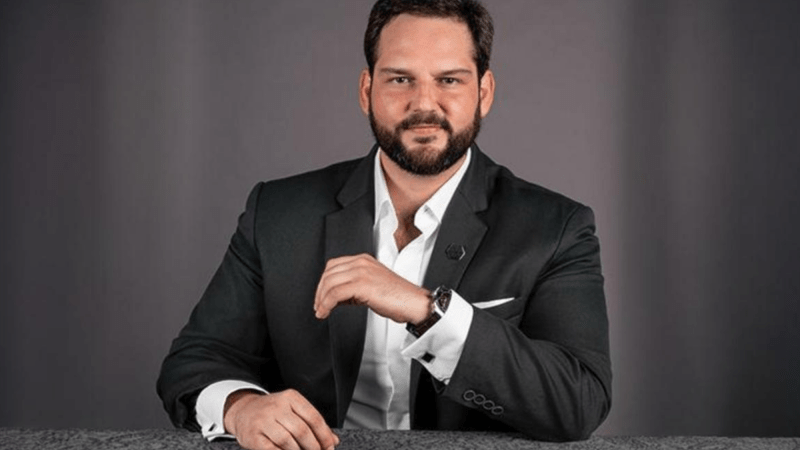
Alesh Ancira
Over the past decade, entrepreneurs operating across global markets have had to navigate accelerating change, shifting capital dynamics, and evolving expectations from institutions and partners. For Alesh Ancira, a founder and investor with experience spanning markets including London, Dubai, Geneva, and New York, these conditions have made one principle increasingly clear: sustainable advantage today depends less on rigid strategy and more on informed flexibility.
For much of the last decade, entrepreneurial success was often associated with conviction — having a clear plan, committing to it early, and executing decisively. While conviction still matters, many founders and investors are discovering that rigidity can become a constraint on long-term performance.
Markets now evolve faster than most strategies. New tools emerge continuously, capital moves more selectively, and operating conditions can change within months rather than years. In this environment, flexibility is no longer a soft trait. It has become a structural advantage.
Flexibility requires clarity, not ambiguity
Flexibility is often misunderstood as indecision or lack of focus. In practice, the opposite tends to be true.
Founders who adapt well usually have a clear sense of where they create value, even if they remain open about how that value is delivered. They understand their arena — the problems they are equipped to solve, the markets they can operate in, and the constraints they face — and adjust execution as conditions evolve.
Without that clarity, flexibility becomes drift. With it, flexibility becomes leverage.
Opportunity now outpaces structure
Entrepreneurs today operate amid overlapping shifts: technological acceleration, changing consumer behavior, evolving regulatory frameworks, and increasing scrutiny from investors and institutions. These forces introduce risk, but they also create opportunity for those who are not overly attached to a single structure or model.
Founders who perform well under these conditions tend to treat tools, platforms, and even business models as components rather than identities. They are willing to reconfigure without abandoning their core direction. This allows them to respond to change without repeatedly starting from zero.
Positioning matters more than prediction
Another common misconception is that success comes from predicting the future accurately. In reality, prediction is fragile. Positioning can contribute to resilience.
Entrepreneurs who remain well-positioned — commercially, reputationally, and operationally — may be better equipped to navigate surprises and respond to unexpected opportunities. They do not need every forecast to be correct. They need their foundation to be adaptable.
This is where flexibility becomes sustainable rather than reactive.
Value creation as an anchor
Amid constant change, one stabilizing factor consistently separates durable businesses from short-lived ones: a genuine orientation toward value creation.
Flexibility can be more effective when decisions are guided by long-term contribution rather than short-term gains. When founders prioritize delivering value — to customers, partners, or broader ecosystems — adaptation may help reinforce relationships rather than strain them.
Over time, this orientation compounds.
Sustainable advantage is dynamic
The idea that entrepreneurial success comes from finding a single winning formula and defending it indefinitely is becoming less realistic. Advantage today is rarely static. It is maintained through alignment, recalibration, and a willingness to adjust without losing coherence.
For founders and investors navigating uncertainty, flexibility is not about chasing trends. It is about staying responsive while remaining grounded — and recognizing that long-term outcomes are often supported by adaptability anchored in a clear sense of purpose.
Over the past decade, entrepreneurs operating across global markets have had to navigate accelerating change, shifting capital dynamics, and evolving expectations from institutions and partners. For Alesh Ancira, a founder and investor with experience spanning markets including London, Dubai, Geneva, and New York, these conditions have made one principle increasingly clear: sustainable advantage today depends less on rigid strategy and more on informed flexibility.
For much of the last decade, entrepreneurial success was often associated with conviction — having a clear plan, committing to it early, and executing decisively. While conviction still matters, many founders and investors are discovering that rigidity can become a constraint on long-term performance.
Markets now evolve faster than most strategies. New tools emerge continuously, capital moves more selectively, and operating conditions can change within months rather than years. In this environment, flexibility is no longer a soft trait. It has become a structural advantage.