Authenticity on The Apprentice
Rosenberg champions authentic communications and bold leadership on The Apprentice.

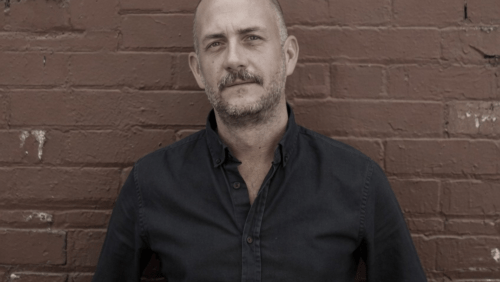
Lawrence Rosenberg founder and CEO
Opinions expressed by Entrepreneur contributors are their own.
You're reading Entrepreneur United Kingdom, an international franchise of Entrepreneur Media.
Lawrence Rosenberg founded Rosenberg.Media to challenge a communications industry he believes has become over-managed and forgettable. From taking personal risks in public commentary to building a media business rooted in authenticity, Rosenberg explains why saying something real now matters more than saying something safe – and how that philosophy shapes his leadership, entrepreneurship, and approach to The Apprentice.
Entrepreneur UK finds out more…
What motivated you to start Rosenberg.Media, and how has your vision evolved since its inception?
Honestly, I saw an opportunity to merge the best of the ‘old-world of PR’ with the new digital age, which is shifting how the public engages with media and content. Fundamentally, I saw an opportunity to capitalise on the demand for authentic communication because it’s defining every part of the algorithms that dictate our content consumption habits. My favourite example is the post-match football interviews – nobody watches them anymore. They all sound the same because every player, even down to semi-pros, has been so heavily media-trained. They lose, and it’s “a tough moment, but we need to stick together”, win, and it’s “a testament to the group and the fans at this amazing club.” It’s all manufactured, and people have learned to tune it out. It’s the same in politics, and it’s fracturing trust in our institutions and the political system as a whole. Comms has become about avoiding disasters, rather than actually communicating. That’s why authentic communicators across the world, from Trump to Mamdani, Farage to Polanski, and even in South and Central America with politicians like Milei and Bukele, are constantly blowing out the old guard of established, ‘safe’ politicians. I’m doing something different because I’m a communications specialist who’s putting my neck out there, just like my clients. I’m not advising clients from behind the scenes, and my commentary in national outlets like The Telegraph and LBC leaves me open to the same kind of scrutiny my clients receive. It’s about comms that hold up under pressure and say something impactful, rather than ‘safe comms’ that says nothing and is forgotten in seconds.
How do you approach risk-taking as an entrepreneur, especially in a constantly shifting media landscape?
Creativity is a risk. I’ve written hundreds of pitches that have fallen flat; that’s the nature of the media game. For every ‘Compare the Meerkat’ left-field idea, there are tens of thousands of creative ideas that just aren’t good enough to see the light of day. That said, I take a people-first approach to everything I do. Sending out thousands of blind-copied emails is always less effective than picking up the phone to five mates you know a story will fit for. So I mitigate my risk by having a deep black book of people I consider friends, not just useful connections. Then it comes to the business: I’ve been extremely blessed to be near capacity since the day we launched. I’m still able to take on media training and keynote opportunities because they’re limited-time engagements, but for longer-term client projects, I’ve partnered with Spreckley to ensure we can handle the demand. Spreckley, the last agency I worked for, is a phenomenal outfit, and their CEO, Richard Merrin, is a close friend and mentored me into the PR I am today. It’s a dream scenario: I can take on additional opportunities, and I’ve worked with everyone at the company, so it’s a seamless extension. It removes the major overhead risk in the early stages and benefits everyone.
Given the privileged position that demand hasn’t proven to be the issue, the main strategic risk is putting myself out there as a communicator, rather than hiding in the shadows whilst advising others. But of course, being visible is also part of my business model. Obviously, every media engagement carries risk, but where there’s risk, there’s also opportunity. That opportunity presents itself as visibility, credibility, and the chance to deliver my message to the kind of audiences that I encourage my clients to engage with. Safe media engagements have created a window to do something different, and living by my own gospel is the best way to advertise it, even with the potential risks.
What’s the most important lesson you’ve learned while growing a business from the ground up?
You literally have to do everything as a founder. On any given day, alongside the day job, I’m a website designer, a graphic designer, a social media consultant, a financial controller, an administrator and about every other job you can think of. But I love it. I’d been thinking about making the jump for a while, but I also loved my job, and I wasn’t in a rush to make the move. The Apprentice gave me a unique chance to launch from a platform, so I basically concluded that the bigger risk was not taking one while I had the visibility of one of the UK’s most prominent shows.
Thankfully, despite it being my first foray as a founder, I’ve been part of the start-up ecosystem for a while, including as a PR Mentor for BlockDojo & SOBO Club alongside being a contributor to Startups Magazine. It’s given me a priceless network that has supported me tremendously in the early stages. So, in short, the lesson is you are going to have to do it all yourself. But when it’s all for your own thing, it’s empowering, so I’ve enjoyed the experience so far!
With your upcoming appearance on The Apprentice, what do you hope to demonstrate about your leadership style and approach to problem-solving?
With The Apprentice, I knew going into it that things go wrong, so in a sense it’s about how you react when that happens. It’s the show’s 20th season, and I wasn’t going to magically be the candidate that didn’t make a single mistake! I know it sounds ridiculous and probably rather obvious, but I decided just to be myself and see how things shook out. It’s unbelievably difficult to do that when you’ve got cameras in your face, and it’s easy to feel like you’ve got to be a certain way to be able to stand out.
That said, I remember going into the process, in quite literally my first interview, I said my game plan was just going to be a decent bloke and competent, because it’s got me this far in life. So that was my mindset: being relaxed helps you make clearer decisions and easier to just be you, rather than worrying about creating a caricature or putting pressure on everything around me. I’m also naturally quite a creative person, and I make it my goal to always bring a ton of energy and personal investment to everything I do. So, being relaxed and just enjoying myself, I hoped, would let that flow through as much as possible. I knew if I got fired for being myself, I could live with it. Going home for trying to be someone else would be unbearable.
Realistically, that’s not the easiest formula for a show like The Apprentice, and mistakes happen, but I’ll be laughing along with everyone at home. It’s also a ton of fun being in the process. I love my job, but it’s very screen-focused on a day-to-day basis. So I just told myself to go in and have fun because it really is a totally unique one-in-a-lifetime experience, and then let instinct do the rest. At the end of the day, people invest in you as a person more than your business, so being enjoyable to work with should always be mission-critical.
As someone who’s built a media company from the ground up, what key lessons about scaling a business will you bring to the Apprentice boardroom?
Well, it’s that perception matters. How you’re perceived fundamentally alters every interaction you have in business, and usually in your personal life too. You know how every website has “as featured in” plastered across the front of the site? That’s because it builds trust, people recognise a trusted third-party endorsement, and buy into a product or service as a result. My own website has that exact banner, for no other reason than it works. So, how does this relate to the boardroom? Well, perception is everything on a show like The Apprentice. If you’re an easy target, there’s a chance people turn on you. If you’re perceived as too quiet or not contributing, there’s a good chance you’ll get the boot.
There are a ton of negative perceptions that can impact your performance in a highly competitive environment like that. Then there’s the perception around your creations on the show. No spoilers from me, but from watching previous seasons, you have to be able to tell the story of whatever you’re delivering, be it a product, experience or even your performance on a task. Obviously, a lot of things you build and create take 100 times longer in real life than they do on the show, so you have to sell a vision and a perception that wins people over. And that goes to my business too. I want Rosenberg.Media perceived as a trustworthy outfit that can be trusted to deliver brand stories to wider audiences in an authentic manner, in a way that is aligned with the new age of communications.
What’s one trend in media or entrepreneurship that excites you most for the future?
I’m excited for people to start actually saying things again. Politics is reflecting the public mood and the demand for authenticity in communications. You only need to see Zach Polanski and Nigel Farage topping the polls to see that the age of managed communications has finally ended. Like a social media algorithm, the public is scrolling past the boring cut-and-paste communicators.
I’m excited for people and politicians to go off script and tell us what they really think. The people who stay true to themselves and deliver a clear message are the ones who are getting cut through. Frankly, I’m bored with everyone saying the same managed response that’s been through 30 layers of PR teams, HR, legal, and focus groups. Authentic comms is moving into the mainstream – it’s going to be an exciting watch as people stop all sounding the same and start communicating in a way that sounds human.
How do you balance creative innovation with the business demands of running a media company?
Well, as I said in my Apprentice bio, I’ve always been passionate about finding better ways to do things, so even in my day-to-day admin, I’ve built streamlined processes so I can focus on delivering for clients rather than spending my life putting out proverbial fires. In terms of my work and actual PR creativity, I’m super invested in everyone I work with, so it’s just about bringing my usual creativity to what I do. Just because I’m busy running a business doesn’t mean I want to give up the day job!
Lawrence Rosenberg founded Rosenberg.Media to challenge a communications industry he believes has become over-managed and forgettable. From taking personal risks in public commentary to building a media business rooted in authenticity, Rosenberg explains why saying something real now matters more than saying something safe – and how that philosophy shapes his leadership, entrepreneurship, and approach to The Apprentice.
Entrepreneur UK finds out more…
What motivated you to start Rosenberg.Media, and how has your vision evolved since its inception?
Honestly, I saw an opportunity to merge the best of the ‘old-world of PR’ with the new digital age, which is shifting how the public engages with media and content. Fundamentally, I saw an opportunity to capitalise on the demand for authentic communication because it’s defining every part of the algorithms that dictate our content consumption habits. My favourite example is the post-match football interviews – nobody watches them anymore. They all sound the same because every player, even down to semi-pros, has been so heavily media-trained. They lose, and it’s “a tough moment, but we need to stick together”, win, and it’s “a testament to the group and the fans at this amazing club.” It’s all manufactured, and people have learned to tune it out. It’s the same in politics, and it’s fracturing trust in our institutions and the political system as a whole. Comms has become about avoiding disasters, rather than actually communicating. That’s why authentic communicators across the world, from Trump to Mamdani, Farage to Polanski, and even in South and Central America with politicians like Milei and Bukele, are constantly blowing out the old guard of established, ‘safe’ politicians. I’m doing something different because I’m a communications specialist who’s putting my neck out there, just like my clients. I’m not advising clients from behind the scenes, and my commentary in national outlets like The Telegraph and LBC leaves me open to the same kind of scrutiny my clients receive. It’s about comms that hold up under pressure and say something impactful, rather than ‘safe comms’ that says nothing and is forgotten in seconds.
How do you approach risk-taking as an entrepreneur, especially in a constantly shifting media landscape?
Creativity is a risk. I’ve written hundreds of pitches that have fallen flat; that’s the nature of the media game. For every ‘Compare the Meerkat’ left-field idea, there are tens of thousands of creative ideas that just aren’t good enough to see the light of day. That said, I take a people-first approach to everything I do. Sending out thousands of blind-copied emails is always less effective than picking up the phone to five mates you know a story will fit for. So I mitigate my risk by having a deep black book of people I consider friends, not just useful connections. Then it comes to the business: I’ve been extremely blessed to be near capacity since the day we launched. I’m still able to take on media training and keynote opportunities because they’re limited-time engagements, but for longer-term client projects, I’ve partnered with Spreckley to ensure we can handle the demand. Spreckley, the last agency I worked for, is a phenomenal outfit, and their CEO, Richard Merrin, is a close friend and mentored me into the PR I am today. It’s a dream scenario: I can take on additional opportunities, and I’ve worked with everyone at the company, so it’s a seamless extension. It removes the major overhead risk in the early stages and benefits everyone.

Patricia Cullen • Features Writer
Entrepreneur Staff